神经网络小白入门:从0看懂基础神经网络算法,公式+步骤超详细!
结构:输入→隐藏→输出,每层靠神经元(加权+激活)处理;流程:前向算预测→误差算对错→反向调参数(梯度下降);工具:不用死磕数学,先跑通简单代码(比如上面的Python示例),再慢慢理解细节。神经网络没那么玄乎,入门先抓“分层”“加权”“梯度下降”这3个核心,后续再学CNN(图像)、RNN(文本)就顺理成章啦!
想入门AI却被“神经网络”吓退?其实它本质是模拟大脑思考的数学模型,今天用大白话拆解核心逻辑,小白也能轻松get!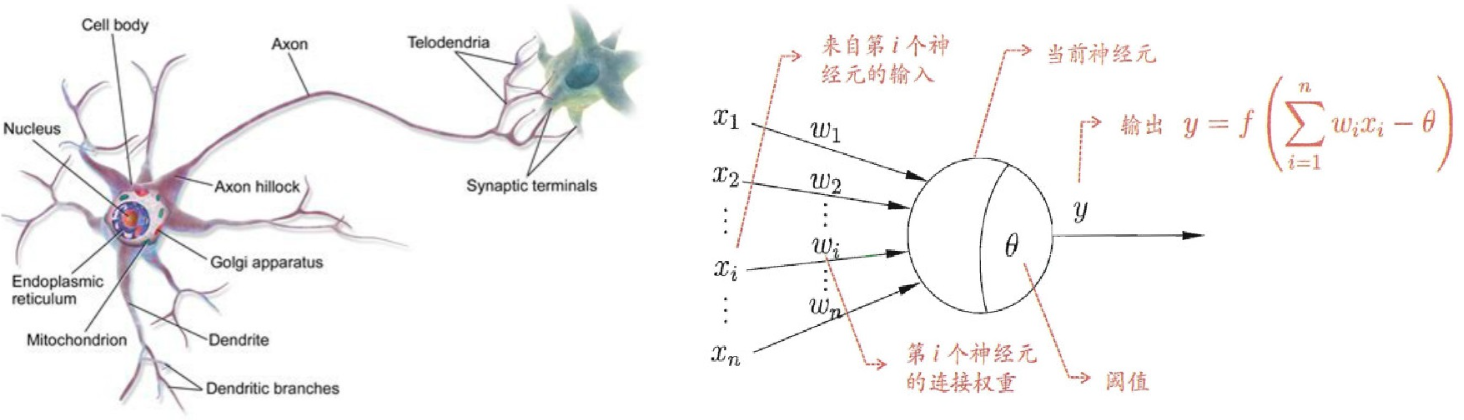
另外,我还整理总结了神经网络算法经典论文+示例代码,感兴趣的dd~
一、先搞懂:神经网络像“多层计算器”
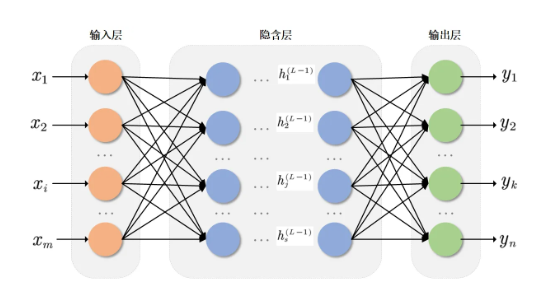
神经网络的核心是分层处理信息,就像工厂流水线:原料(输入数据)→加工(隐藏层)→成品(输出结果)。
1. 3大核心层(必记结构)
- 输入层:接收原始数据,比如识别图片时的像素值、预测房价时的面积/地段数据。
✅ 节点数=输入数据的维度(例:用2个特征预测房价,输入层就有2个节点)。 - 隐藏层:核心“加工间”,负责提取数据特征(比如从图片像素中识别“边缘”“颜色块”)。
✅ 层数和节点数可调整,简单任务1-2层足够,复杂任务(如图像识别)可能有几十层。 - 输出层:输出最终结果,比如“这张图是猫(1)还是狗(0)”“房价预测值150万”。
✅ 节点数=任务目标(二分类1个节点,多分类(如识别10种动物)10个节点)。
二、最小单元:神经元怎么“思考”?
每层的“节点”就是神经元,它的工作分3步,核心是加权计算+非线性转换。
1. 第一步:算“加权输入”(给输入打分)
每个输入会被赋予一个“权重”( w i w_i wi,可理解为“重要性”),再加上一个“偏置”( b b b,调整基准),求和得到净输入 z z z。
公式: z = w 1 x 1 + w 2 x 2 + . . . + w n x n + b = ∑ i = 1 n w i x i + b z = w_1x_1 + w_2x_2 + ... + w_nx_n + b = \sum_{i=1}^n w_i x_i + b z=w1x1+w2x2+...+wnxn+b=∑i=1nwixi+b
- x i x_i xi:神经元的第 i i i个输入(比如输入层的“面积”“地段”);
- w i w_i wi:对应 x i x_i xi的权重(比如“面积”对房价影响大, w w w就大);
- b b b:偏置项(避免输入全为0时神经元“不工作”)。
例子:用“面积( x 1 = 100 m 2 x_1=100m² x1=100m2, w 1 = 1.2 w_1=1.2 w1=1.2)”“地段( x 2 = 8 x_2=8 x2=8分, w 2 = 5 w_2=5 w2=5)”预测房价,偏置 b = 20 b=20 b=20,则:
z = 1.2 × 100 + 5 × 8 + 20 = 120 + 40 + 20 = 180 z = 1.2×100 + 5×8 + 20 = 120 + 40 + 20 = 180 z=1.2×100+5×8+20=120+40+20=180。
2. 第二步:过“激活函数”(加个“决策规则”)
净输入 z z z是线性的,无法处理复杂问题(比如区分“猫”和“狗”的非线性特征),所以需要激活函数把 z z z转换成非线性输出 a a a。
常用3种激活函数(记这3个足够入门):
| 激活函数 | 公式 | 作用 | 适用场景 |
|---|---|---|---|
| Sigmoid | a = 1 1 + e − z a = \frac{1}{1+e^{-z}} a=1+e−z1 | 把输出压到(0,1)之间,代表“概率” | 二分类(如“是/否”“患病/健康”) |
| ReLU | a = m a x ( 0 , z ) a = max(0, z) a=max(0,z) | 正数直接输出,负数输出0,解决“梯度消失” | 隐藏层(最常用) |
| Tanh | a = e z − e − z e z + e − z a = \frac{e^z - e^{-z}}{e^z + e^{-z}} a=ez+e−zez−e−z | 把输出压到(-1,1)之间,均值更接近0 | 隐藏层(比Sigmoid收敛快) |
接上面例子:若用ReLU激活, a = m a x ( 0 , 180 ) = 180 a = max(0, 180) = 180 a=max(0,180)=180(可理解为房价的“初步预测值”)。
3. 第三步:输出结果(传给下一层或收尾)
激活后的 a a a,要么作为下一层神经元的输入,要么作为最终结果(如输出层用Sigmoid输出“是猫的概率0.92”)。
三、核心流程:神经网络怎么“学”?(前向+反向)
神经网络的“学习”,本质是通过前向传播算预测值→反向传播调参数,不断降低“预测误差”。
1. 前向传播:从输入到输出的“正向计算”
简单说就是“逐层算输出”,把输入层数据通过权重、偏置、激活函数,一步步传到输出层,得到预测值 y ^ \hat{y} y^。
以“输入层(2节点)→隐藏层(3节点)→输出层(1节点)”为例:
- 输入层→隐藏层:每个隐藏节点用公式 z 隐 = ∑ w 输入 → 隐 x + b 隐 z_{隐} = \sum w_{输入→隐}x + b_{隐} z隐=∑w输入→隐x+b隐算净输入,再过ReLU得 a 隐 a_{隐} a隐;
- 隐藏层→输出层:输出节点用 z 输 = ∑ w 隐 → 输 a 隐 + b 输 z_{输} = \sum w_{隐→输}a_{隐} + b_{输} z输=∑w隐→输a隐+b输算净输入,再过Sigmoid得预测值 y ^ \hat{y} y^。
2. 误差计算:先看“预测错多少”
有了预测值 y ^ \hat{y} y^,需要和真实值 y y y(比如标签“这是猫, y = 1 y=1 y=1”)比,算“误差”。常用2种误差函数:
- 均方误差(MSE):适用于回归任务(预测连续值,如房价、温度)
公式: L o s s = 1 m ∑ i = 1 m ( y ^ i − y i ) 2 Loss = \frac{1}{m}\sum_{i=1}^m (\hat{y}_i - y_i)^2 Loss=m1∑i=1m(y^i−yi)2
( m m m是样本数,误差越大,Loss值越大) - 交叉熵损失:适用于分类任务(预测离散类别,如猫/狗)
公式(二分类): L o s s = − 1 m ∑ i = 1 m [ y i l o g y ^ i + ( 1 − y i ) l o g ( 1 − y ^ i ) ] Loss = -\frac{1}{m}\sum_{i=1}^m [y_i log\hat{y}_i + (1-y_i)log(1-\hat{y}_i)] Loss=−m1∑i=1m[yilogy^i+(1−yi)log(1−y^i)]
3. 反向传播:“倒着调参数”(最关键!)
误差出来后,要反过来调整所有的 w w w(权重)和 b b b(偏置),让下次预测更准。核心是用梯度下降找“最优参数”。
(1)核心逻辑:梯度下降
梯度是“误差对参数的导数”,代表“参数变化1单位时,误差的变化方向”。梯度下降的规则是:
参数 = 参数 - 学习率×梯度
- 学习率( η \eta η):控制每次调整的“步长”,太大容易“跑过头”,太小收敛慢(常用0.01、0.1);
- 梯度:若梯度为正,参数减“步长”→误差减小;若梯度为负,参数加“步长”→误差减小。
(2)具体步骤(简化版,小白能懂)
- 算输出层误差:用误差函数对输出层的 z z z求导,得到输出层误差 δ 输 \delta_{输} δ输;
- 传误差到隐藏层:用输出层误差 δ 输 \delta_{输} δ输和权重 w 隐 → 输 w_{隐→输} w隐→输,算隐藏层误差 δ 隐 \delta_{隐} δ隐(链式法则);
- 更参数:用误差 δ \delta δ算梯度,再按“参数=参数-η×梯度”调整 w w w和 b b b。
假设某权重 w = 2 w=2 w=2,梯度=0.5,学习率 η = 0.1 \eta=0.1 η=0.1,则新权重: w 新 = 2 − 0.1 × 0.5 = 1.95 w_{新}=2 - 0.1×0.5 = 1.95 w新=2−0.1×0.5=1.95。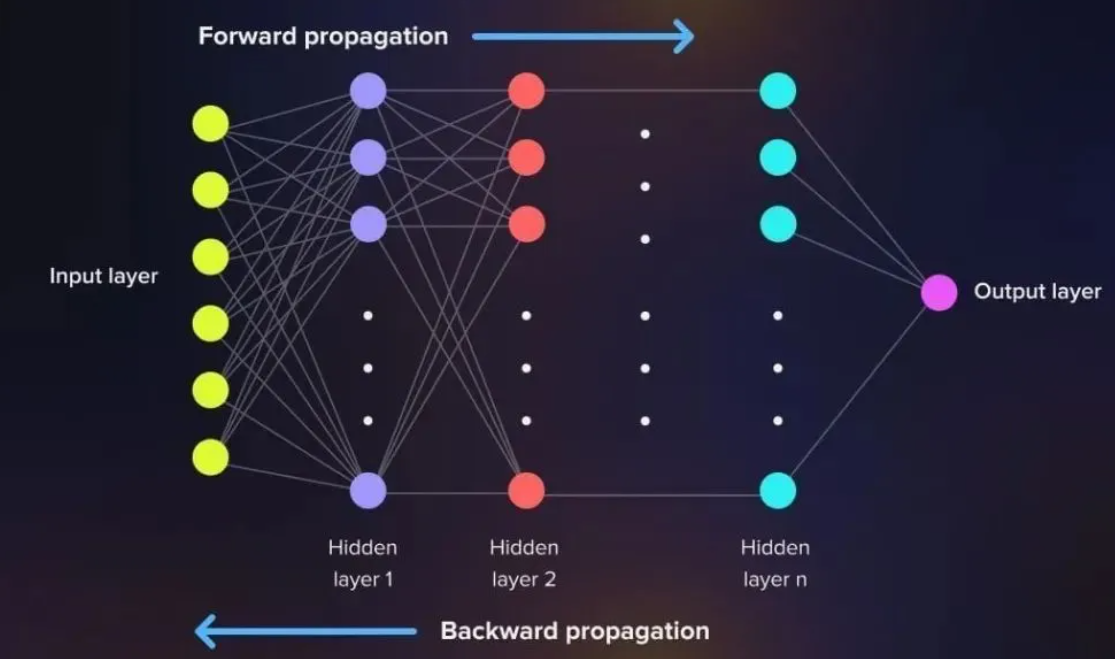
四、小白必知:2个实用知识点
1. 常见优化算法(比“普通梯度下降”更好用)
- SGD(随机梯度下降):每次用1个样本更参数,快但波动大;
- Mini-Batch(小批量):每次用10-100个样本更参数,平衡“速度”和“稳定”(最常用);
- Adam:自带“动量”和“自适应学习率”,新手直接用,收敛快还不容易卡壳。
2. 简单代码示例(Python版,能跑通!)
用Python实现一个“预测房价”的简单神经网络(3层,输入2个特征,输出1个房价):
import numpy as np
import matplotlib.pyplot as plt
from matplotlib.ticker import MaxNLocator
import os

# 创建保存图片的目录
if not os.path.exists('nn_plots'):
    os.makedirs('nn_plots')

# 1. 激活函数及其导数
def relu(z):
    return np.maximum(0, z)

def relu_derivative(z):
    return (z > 0).astype(float)  # ReLU derivative

def linear(z):
    return z  # Linear activation for output layer

def linear_derivative(z):
    return np.ones_like(z)  # Derivative of linear function is 1

# 2. 参数初始化 (使用Xavier初始化改进)
def init_params(input_dim, hidden_dim, output_dim):
    # Xavier initialization for more stable training
    w1 = np.random.randn(input_dim, hidden_dim) * np.sqrt(2 / (input_dim + hidden_dim))
    b1 = np.zeros((1, hidden_dim))  # Hidden layer bias

    w2 = np.random.randn(hidden_dim, output_dim) * np.sqrt(2 / (hidden_dim + output_dim))
    b2 = np.zeros((1, output_dim))  # Output layer bias

    return w1, b1, w2, b2

# 3. 前向传播
def forward(w1, b1, w2, b2, X):
    z1 = np.dot(X, w1) + b1  # Input to hidden layer net input
    a1 = relu(z1)            # Hidden layer output
    z2 = np.dot(a1, w2) + b2 # Hidden to output layer net input
    a2 = linear(z2)          # Output layer uses linear activation for regression

    return z1, a1, z2, a2

# 4. 损失计算 (MSE)
def compute_loss(a2, Y):
    m = Y.shape[0]
    loss = (1/(2*m)) * np.sum((a2 - Y)**2)
    return loss

def compute_loss_derivative(a2, Y):
    return (a2 - Y) / Y.shape[0]  # Derivative of MSE

# 5. 反向传播
def backward(w1, b1, w2, b2, z1, a1, z2, a2, X, Y):
    m = X.shape[0]

    # Output layer gradients
    dz2 = compute_loss_derivative(a2, Y) * linear_derivative(z2)
    dw2 = (1/m) * np.dot(a1.T, dz2)
    db2 = (1/m) * np.sum(dz2, axis=0, keepdims=True)

    # Hidden layer gradients
    dz1 = np.dot(dz2, w2.T) * relu_derivative(z1)
    dw1 = (1/m) * np.dot(X.T, dz1)
    db1 = (1/m) * np.sum(dz1, axis=0, keepdims=True)

    return dw1, db1, dw2, db2

# 6. 参数更新 (带学习率衰减)
def update_params(w1, b1, w2, b2, dw1, db1, dw2, db2, lr, decay_rate=0.0001, epoch=0):
    # Learning rate decay
    current_lr = lr / (1 + decay_rate * epoch)

    w1 = w1 - current_lr * dw1
    b1 = b1 - current_lr * db1
    w2 = w2 - current_lr * dw2
    b2 = b2 - current_lr * db2

    return w1, b1, w2, b2, current_lr

# 7. 可视化函数
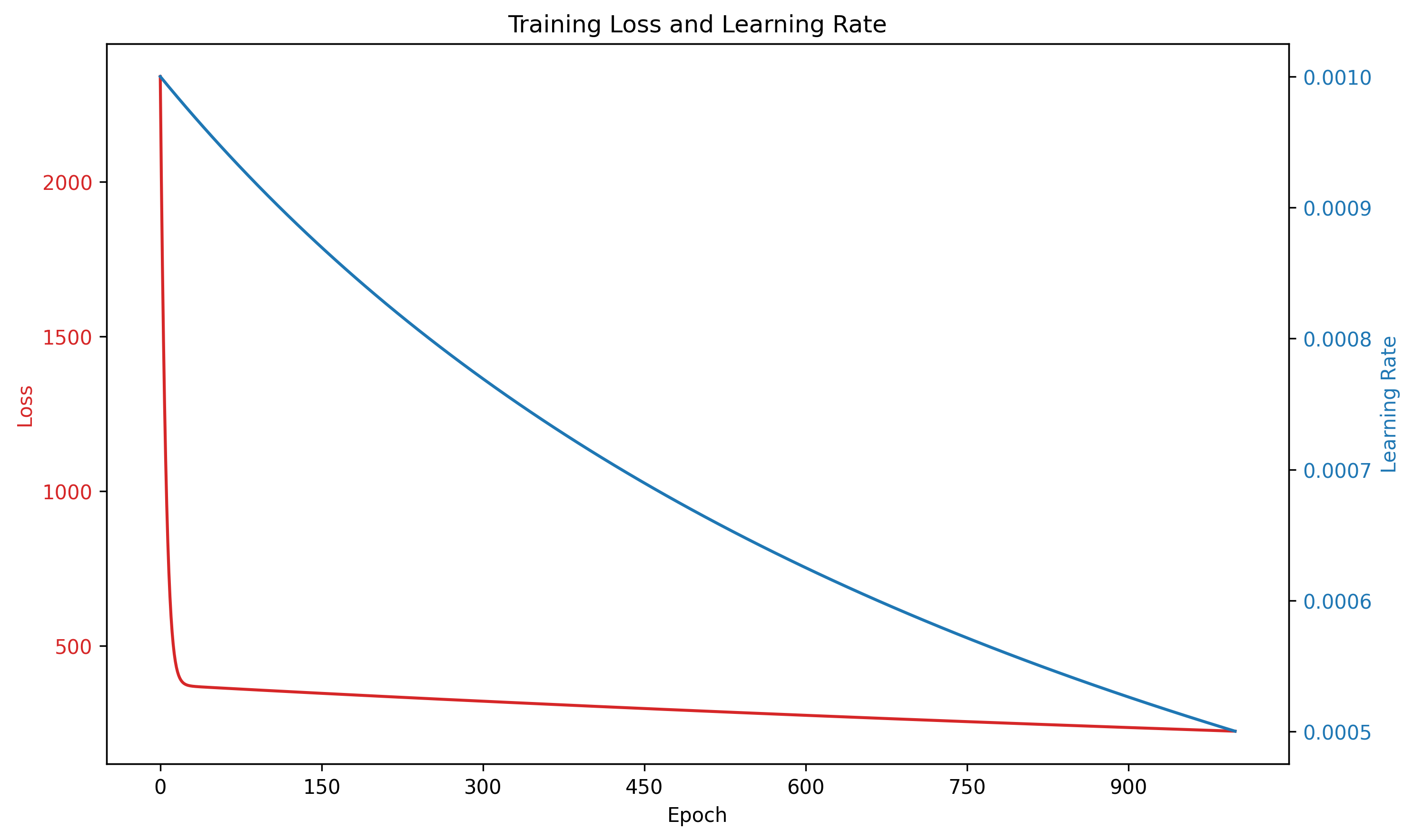
def plot_training_curve(losses, learning_rates, save_path='nn_plots/training_curve.png'):
    """Plot training loss and learning rate curves"""
    fig, ax1 = plt.subplots(figsize=(10, 6))

    color = 'tab:red'
    ax1.set_xlabel('Epoch')
    ax1.set_ylabel('Loss', color=color)
    ax1.plot(losses, color=color)
    ax1.tick_params(axis='y', labelcolor=color)
    ax1.xaxis.set_major_locator(MaxNLocator(integer=True))
    ax1.set_title('Training Loss and Learning Rate')

    ax2 = ax1.twinx()  # instantiate a second axes that shares the same x-axis
    color = 'tab:blue'
    ax2.set_ylabel('Learning Rate', color=color)  # we already handled the x-label with ax1
    ax2.plot(learning_rates, color=color)
    ax2.tick_params(axis='y', labelcolor=color)

    fig.tight_layout()  # otherwise the right y-label is slightly clipped
    plt.savefig(save_path, dpi=300, bbox_inches='tight')
    plt.close()

def plot_predictions_vs_actual(Y, predictions, epoch, save_dir='nn_plots/'):
    """Plot predictions vs actual values"""
    plt.figure(figsize=(10, 6))
    plt.scatter(Y, predictions, alpha=0.6)
    plt.plot([Y.min(), Y.max()], [Y.min(), Y.max()], 'r--')  # Perfect prediction line
    plt.xlabel('Actual Values')
    plt.ylabel('Predictions')
    plt.title(f'Predictions vs Actual Values (Epoch {epoch})')
    plt.grid(True, linestyle='--', alpha=0.7)
    plt.savefig(f'{save_dir}predictions_epoch_{epoch}.png', dpi=300, bbox_inches='tight')
    plt.close()

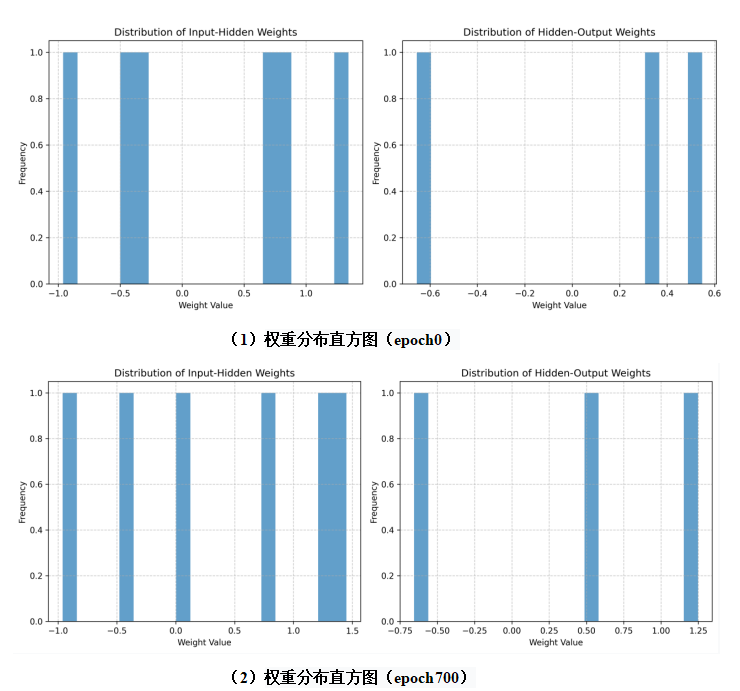
def plot_weight_distributions(w1, w2, epoch, save_dir='nn_plots/'):
    """Plot weight distributions"""
    fig, (ax1, ax2) = plt.subplots(1, 2, figsize=(12, 5))

    ax1.hist(w1.flatten(), bins=20, alpha=0.7)
    ax1.set_title('Distribution of Input-Hidden Weights')
    ax1.set_xlabel('Weight Value')
    ax1.set_ylabel('Frequency')
    ax1.grid(True, linestyle='--', alpha=0.7)

    ax2.hist(w2.flatten(), bins=20, alpha=0.7)
    ax2.set_title('Distribution of Hidden-Output Weights')
    ax2.set_xlabel('Weight Value')
    ax2.set_ylabel('Frequency')
    ax2.grid(True, linestyle='--', alpha=0.7)

    plt.tight_layout()
    plt.savefig(f'{save_dir}weights_dist_epoch_{epoch}.png', dpi=300, bbox_inches='tight')
    plt.close()

# 8. 主训练函数
def train_model(X, Y, input_dim, hidden_dim, output_dim, epochs=1000, lr=0.1, decay_rate=0.0001):
    # Initialize parameters
    w1, b1, w2, b2 = init_params(input_dim, hidden_dim, output_dim)

    # Lists to track training progress
    losses = []
    learning_rates = []

    # Initial predictions
    _, _, _, initial_preds = forward(w1, b1, w2, b2, X)
    plot_predictions_vs_actual(Y, initial_preds, 0)
    plot_weight_distributions(w1, w2, 0)

    # Training loop
    for epoch in range(epochs):
        # Forward propagation
        z1, a1, z2, a2 = forward(w1, b1, w2, b2, X)

        # Compute loss
        loss = compute_loss(a2, Y)
        losses.append(loss)

        # Backward propagation
        dw1, db1, dw2, db2 = backward(w1, b1, w2, b2, z1, a1, z2, a2, X, Y)

        # Update parameters with learning rate decay
        w1, b1, w2, b2, current_lr = update_params(
            w1, b1, w2, b2, dw1, db1, dw2, db2, lr, decay_rate, epoch
        )
        learning_rates.append(current_lr)

        # Print progress and save plots at intervals
        if epoch % 100 == 0:
            print(f"Epoch {epoch}, Loss: {loss:.4f}, Learning Rate: {current_lr:.6f}")

            # Save predictions plot at certain epochs
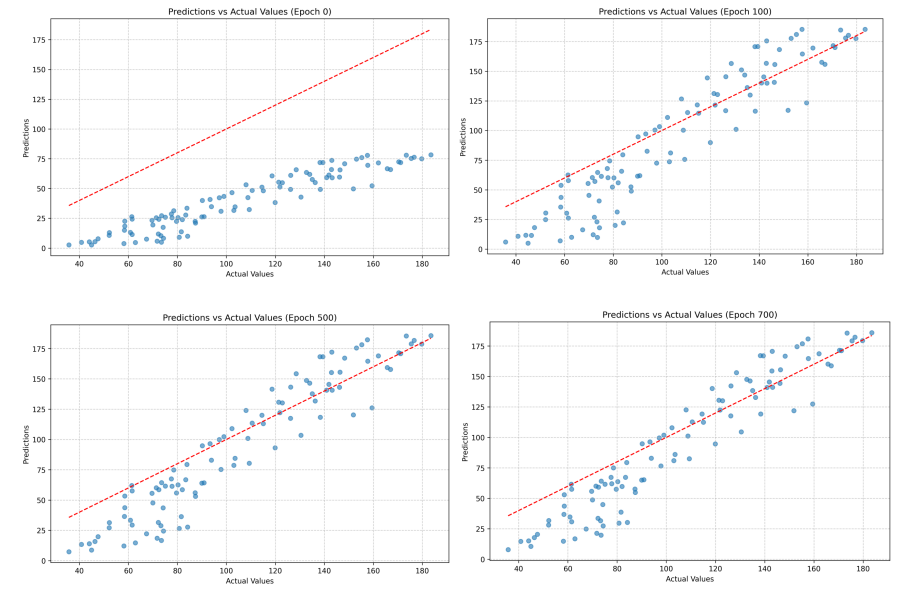
            if epoch in [100, 300, 500, 700, epochs-1]:
                plot_predictions_vs_actual(Y, a2, epoch)
                plot_weight_distributions(w1, w2, epoch)

    # Final plots
    plot_training_curve(losses, learning_rates)

    return w1, b1, w2, b2, losses

# 9. 测试模型
if __name__ == "__main__":
    # Generate synthetic data (house prices based on area and location)
    np.random.seed(42)  # For reproducibility
    num_samples = 100

    # Features: area (in 100 sq.m), location score (1-10)
    X = np.random.rand(num_samples, 2)
    X[:, 0] = X[:, 0] * 100  # Area: 0-100 sq.m
    X[:, 1] = X[:, 1] * 9 + 1  # Location score: 1-10

    # True price function with some noise
    true_weights = np.array([1.2, 5.0])  # Weights for area and location
    true_bias = 20.0  # Base price
    noise = np.random.normal(0, 5, (num_samples, 1))  # Add some noise
    Y = (X @ true_weights).reshape(-1, 1) + true_bias + noise

    # Train the model
    print("Starting model training...")
    w1, b1, w2, b2, losses = train_model(
        X, Y,
        input_dim=2,
        hidden_dim=3,
        output_dim=1,
        epochs=1000,
        lr=0.001,  # Lower learning rate for more stable training
        decay_rate=0.001
    )

    # Final evaluation
    _, _, _, final_preds = forward(w1, b1, w2, b2, X)
    final_loss = compute_loss(final_preds, Y)
    print(f"\nFinal training loss: {final_loss:.4f}")

    # Print true vs learned parameters for comparison
    print("\nTrue weights:", true_weights)
    print("True bias:", true_bias)

    # Print model architecture summary
    print("\nModel Architecture:")
    print(f"Input layer: {X.shape[1]} features")
    print(f"Hidden layer: {w1.shape[1]} neurons")
    print(f"Output layer: {w2.shape[1]} output")
五、总结:小白入门3个关键
- 结构:输入→隐藏→输出,每层靠神经元(加权+激活)处理;
- 流程:前向算预测→误差算对错→反向调参数(梯度下降);
- 工具:不用死磕数学,先跑通简单代码(比如上面的Python示例),再慢慢理解细节。
神经网络没那么玄乎,入门先抓“分层”“加权”“梯度下降”这3个核心,后续再学CNN(图像)、RNN(文本)就顺理成章啦!

腾讯云面向开发者汇聚海量精品云计算使用和开发经验,营造开放的云计算技术生态圈。
更多推荐
 28
28 0
0- 0


 已为社区贡献7条内容

所有评论(0)