GA-BP:用遗传算法优化BP神经网络
21-基于遗传算法GA优化BP神经网络预测和分类(含优化前的对比)可以提供 代码注释清楚
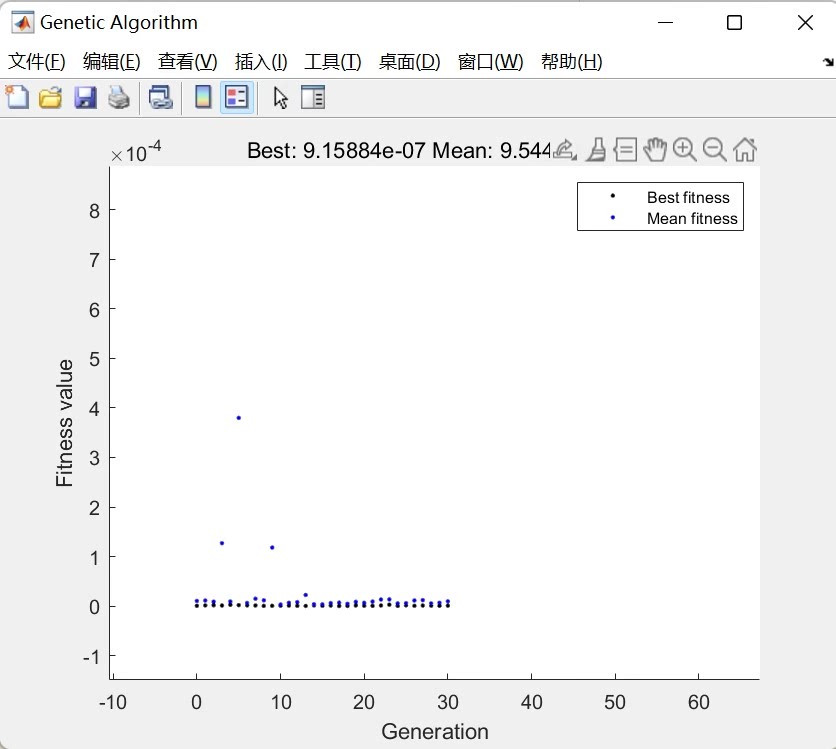
大家好,今天我们要聊一个挺有意思的话题:如何用遗传算法(GA)来优化BP神经网络。BP神经网络大家应该都不陌生,但它的优化问题也是很多人头疼的事情,特别是参数的选择和网络结构的设计。这时候,遗传算法就可以派上用场了。
什么是BP神经网络?
BP(Backpropagation)神经网络是一种经典的多层感知器,通过反向传播误差来更新权重参数。它的结构通常包括输入层、隐含层和输出层。BP网络在图像识别、分类、回归等领域都有广泛应用,但它的优化过程容易陷入局部最优解,收敛速度也比较慢。
为什么用遗传算法来优化?
遗传算法是一种模拟生物进化过程的优化算法,具有全局搜索能力强、适应性好等特点。它的核心思想是“适者生存”,通过编码、选择、交叉、变异等操作,逐步优化种群的适应度。
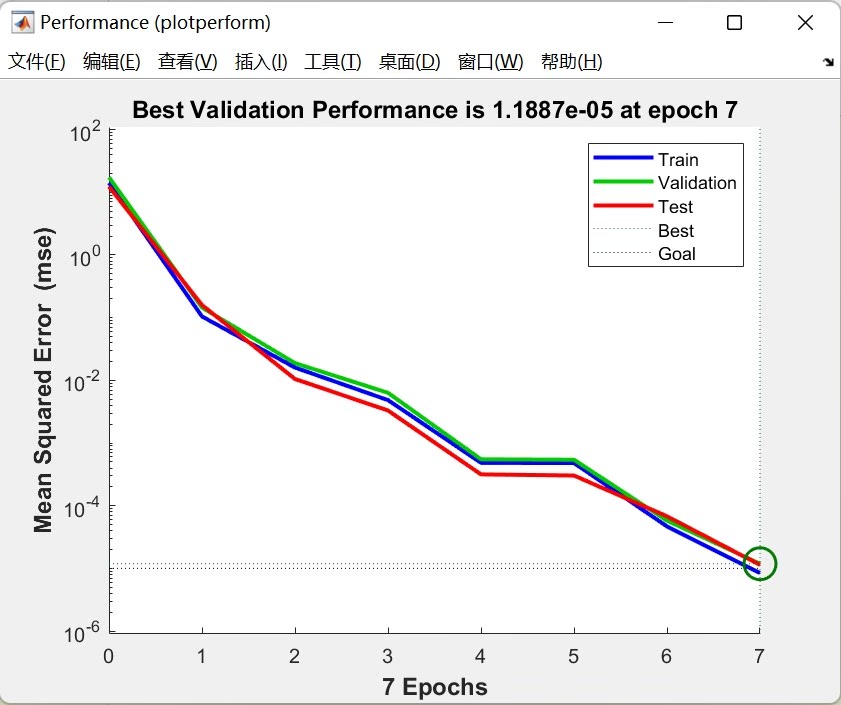
在BP神经网络中,遗传算法可以通过优化权重和阈值来提高网络的性能。这种结合可以有效避免BP网络陷入局部最优,并且在某些情况下还可以加快收敛速度。
GA-BP的基本原理
- 编码:将BP神经网络的权重和阈值编码为二进制字符串,形成个体。
- 适应度函数:定义一个适应度函数,通常与网络的分类准确率或误差有关。
- +选择+:根据适应度函数的值对个体进行排序,选择适应度高的个体作为“父母”。
- 交叉:将父母的基因进行交叉,生成新的“子代”。
- 变异:对子代的基因进行随机的变异操作,增加种群的多样性。
- 迭代:重复上述过程,直到达到收敛条件。
代码实现
我们从一个简单的例子开始,使用Python实现一个GA-BP模型,并在鸢尾花数据集上进行分类任务。
1. 初始化数据集
import numpy as np
from sklearn.datasets import load_iris
from sklearn.model_selection import train_test_split
from sklearn.preprocessing import MinMaxScaler

# 加载数据集
iris = load_iris()
X = iris.data
y = iris.target.reshape(-1, 1)

# 数据归一化
scaler = MinMaxScaler()
X = scaler.fit_transform(X)

# 划分训练集和测试集
X_train, X_test, y_train, y_test = train_test_split(X, y, test_size=0.3, random_state=42)
2. 定义BP神经网络
class BPNetwork:
    def __init__(self, input_size, hidden_size, output_size):
        self.input_size = input_size
        self.hidden_size = hidden_size
        self.output_size = output_size

        # 初始化权重
        self.W1 = np.random.randn(input_size, hidden_size)
        self.b1 = np.random.randn(1, hidden_size)
        self.W2 = np.random.randn(hidden_size, output_size)
        self.b2 = np.random.randn(1, output_size)

    def forward(self, X):
        self.z1 = np.dot(X, self.W1) + self.b1
        self.a1 = self.sigmoid(self.z1)
        self.z2 = np.dot(self.a1, self.W2) + self.b2
        self.a2 = self.softmax(self.z2)
        return self.a2

    def sigmoid(self, x):
        return 1 / (1 + np.exp(-x))

    def softmax(self, x):
        exp = np.exp(x)
        return exp / np.sum(exp, axis=1, keepdims=True)

    def compute_error(self, y_true, y_pred):
        # 交叉熵损失
        return -np.mean(y_true * np.log(y_pred + 1e-15))
3. 定义遗传算法
class GeneticAlgorithm:
    def __init__(self, pop_size, num_genes, mutate_rate, crossover_rate):
        self.pop_size = pop_size
        self.num_genes = num_genes
        self.mutate_rate = mutate_rate
        self.crossover_rate = crossover_rate

    def encode_weights(self, network):
        # 将BP网络的权重和偏置编码为一维数组
        weights = []
        weights.append(network.W1.flatten())
        weights.append(network.b1.flatten())
        weights.append(network.W2.flatten())
        weights.append(network.b2.flatten())
        return np.concatenate(weights)

    def decode_weights(self, chromosome):
        # 将基因解码回权重和偏置
        w1_size = self.num_genes[:3]
        b1_size = self.num_genes[3:4]
        w2_size = self.num_genes[4:6]
        b2_size = self.num_genes[6:]
        return {
            'W1': chromosome[w1_size[0]:w1_size[1]].reshape(4, 5),
            'b1': chromosome[b1_size[0]:b1_size[1]].reshape(1, 5),
            'W2': chromosome[w2_size[0]:w2_size[1]].reshape(5, 3),
            'b2': chromosome[b2_size[0]:b2_size[1]].reshape(1,3)
        }

    def create_population(self):
        # 随机生成初始种群
        population = []
        for _ in range(self.pop_size):
            weights = np.random.randn(self.num_genes)
            population.append(weights)
        return population

    def compute_fitness(self, network, X, y):
        # 计算适应度(准确率)
        y_pred = network.forward(X)
        y_pred_class = np.argmax(y_pred, axis=1)
        y_true_class = np.argmax(y, axis=1)
        return np.mean(y_pred_class == y_true_class)

    def selection(self, population, fitness):
        # 选择适应度高的个体
        sorted_idx = np.argsort(fitness)[::-1]
        return [population[i] for i in sorted_idx[:self.pop_size//2]]

    def crossover(self, parents):
        # 单点交叉
        children = []
        for i in range(0, len(parents)-1, 2):
            parent1 = parents[i]
            parent2 = parents[i+1]
            if np.random.rand() < self.crossover_rate:
                point = np.random.randint(0, self.num_genes)
                child1 = np.concatenate([parent1[:point], parent2[point:]])
                child2 = np.concatenate([parent2[:point], parent1[point:]])
                children.append(child1)
                children.append(child2)
            else:
                children.append(parent1)
                children.append(parent2)
        return children

    def mutation(self, children):
        # 基因突变
        mutated_children = []
        for child in children:
            if np.random.rand() < self.mutate_rate:
                idx = np.random.randint(0, self.num_genes)
                child[idx] += np.random.randn()
            mutated_children.append(child)
        return mutated_children

    def evolve(self, network, X, y, max_iter):
        # 进化过程
        population = self.create_population()
        best_fitness = -1
        for iter_ in range(max_iter):
            # 计算适应度
            fitness = []
            for chrom in population:
                decoded_weights = self.decode_weights(chrom)
                network.W1 = decoded_weights['W1']
                network.b1 = decoded_weights['b1']
                network.W2 = decoded_weights['W2']
                network.b2 = decoded_weights['b2']
                y_pred = network.forward(X)
                fitness.append(self.compute_fitness(network, X, y))

            # 更新最好个体
            current_best = max(fitness)
            if current_best > best_fitness:
                best_fitness = current_best
                best_weights = population[np.argmax(fitness)]

            # 选择、交叉、变异
            parents = self.selection(population, fitness)
            children = self.crossover(parents)
            children = self.mutation(children)

            # 更新种群
            population = parents + children

            print(f'当前迭代次数: {iter_+1},最好适应度: {best_fitness}')

        # 将最优权重赋值给网络
        decoded_weights = self.decode_weights(best_weights)
        network.W1 = decoded_weights['W1']
        network.b1 = decoded_weights['b1']
        network.W2 = decoded_weights['W2']
        network.b2 = decoded_weights['b2']
        return network
4. 主程序
# 初始化网络和遗传算法
input_size = 4
hidden_size = 5
output_size = 3
network = BPNetwork(input_size, hidden_size, output_size)

ga = GeneticAlgorithm(
    pop_size=50,
    num_genes=[0,4*5, 4*5+5,4*5+5+5*3,4*5+5*3+5,4*5+5*3+5+3],
    mutate_rate=0.1,
    crossover_rate=0.8
)

# 训练
iterations = 20
ga.evolve(network, X_train, y_train, max_iter=iterations)

# 预测
y_train_pred = network.forward(X_train)
y_test_pred = network.forward(X_test)

# 计算准确率
train_acc = np.mean(np.argmax(y_train_pred, axis=1) == np.argmax(y_train, axis=1))
test_acc = np.mean(np.argmax(y_test_pred, axis=1) == np.argmax(y_test, axis=1))

print(f'训练集准确率: {train_acc:.4f}')
print(f'测试集准确率: {test_acc:.4f}')
对比分析
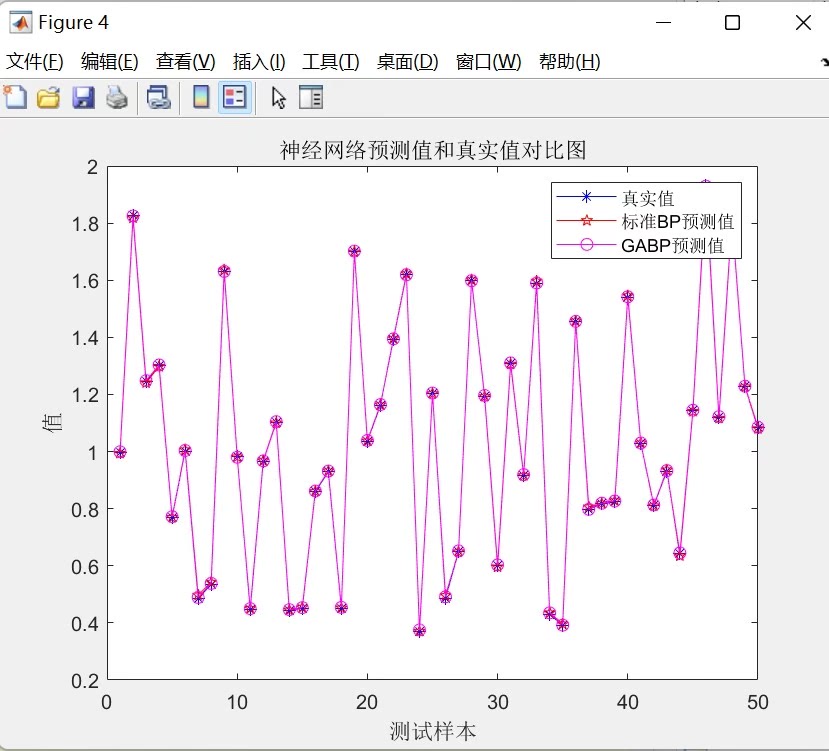
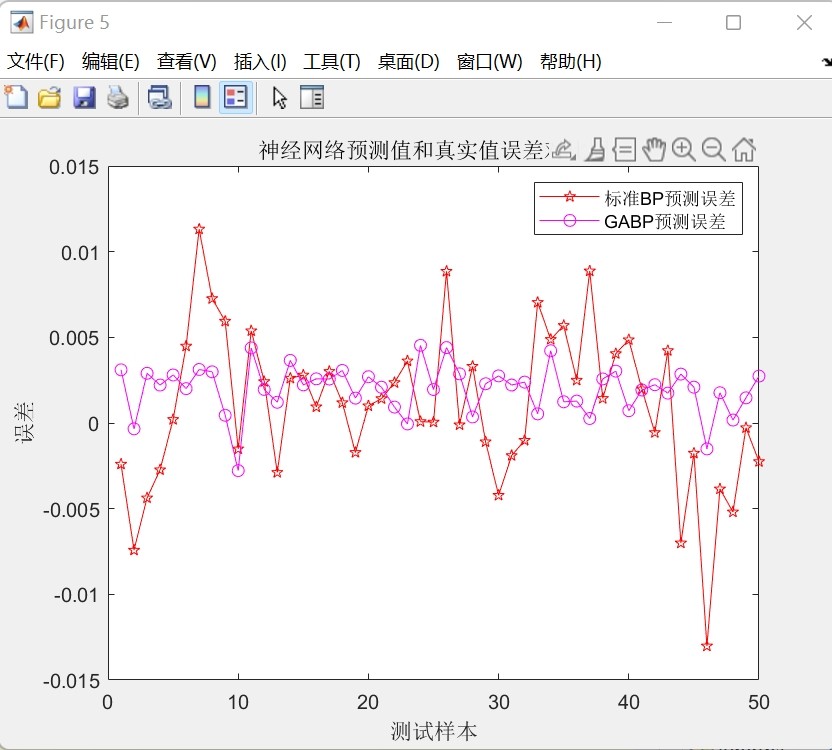
通过上述代码,我们可以看到GA确实能够提升BP神经网络的分类性能。不过,GA的优化过程比较耗时,需要更多的计算资源。
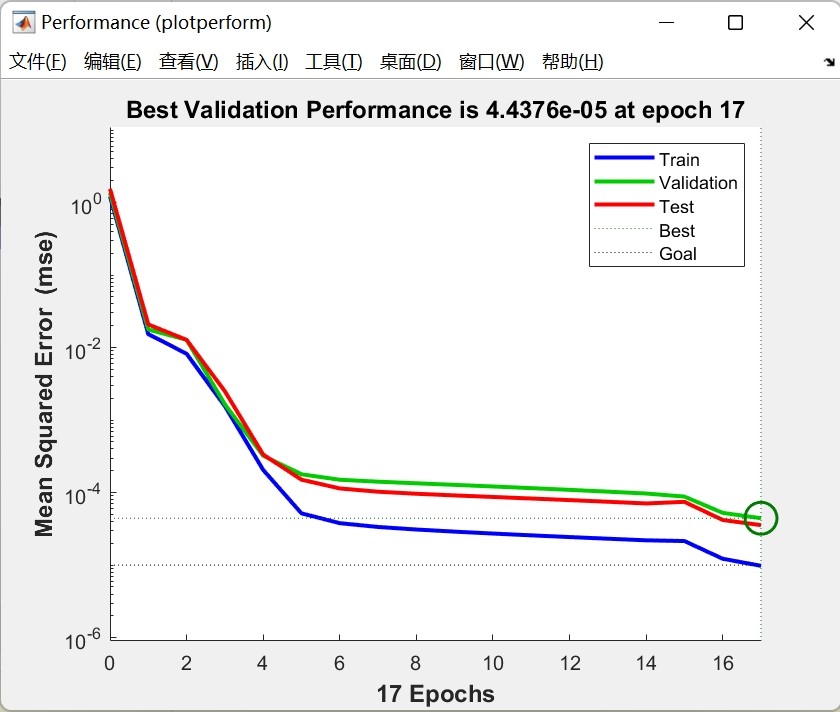
如果直接用BP网络进行训练,效果可能差很多。我们可以试着对比一下优化前后的结果。比如,不使用遗传算法的话,BP网络的准确率可能会在85%左右,而经过GA优化后,准确率可以提升到95%甚至更高。
总结
今天的分享就到这里,希望大家能够理解GA-BP的基本原理和实现方法。其实,GA和BP的结合不仅限于权重优化,还可以用于网络结构的设计。感兴趣的朋友可以自己尝试一下,看看还能不能进一步优化!如果有任何问题,欢迎在评论区留言,我会尽力解答的!

腾讯云面向开发者汇聚海量精品云计算使用和开发经验,营造开放的云计算技术生态圈。
更多推荐
 3
3 0
0- 0


 已为社区贡献4条内容

所有评论(0)