智能家居 (5) ——智能家居项目整合(语音控制线程,网络控制线程、烟雾报警线程)
·
目录
问题2:在前几篇文章中,在open\close操作前都有Init操作
问题3: int (*changeStatus)(int status),记住设备的状态

一、主函数
mianPro.c
#include <pthread.h>
#include "controlDevice.h"
#include "inputCommand.h"

struct InputCommand *pcommandHead = NULL;				              //定义指令工厂初始链表头
struct Devices      *pdeviceHead  = NULL;				              //定义设备工厂初始链表头
struct InputCommand *socketHandler = NULL;

struct Devices* findDeviceByName(char *name, struct Devices *phead)
{
    struct Devices *tmp =phead;
    if(phead == NULL){
        return NULL;
    }else{
        while(tmp != NULL){
            if(strcmp(tmp->deviceName,name)==0){
                return tmp;
            }
            tmp = tmp->next;
        }
        return NULL;
    }
}

struct InputCommand* findCommandByName(char *name, struct InputCommand *phead)
{
    struct InputCommand *tmp =phead;
    if(phead == NULL){
        return NULL;
    }else{
        while(tmp != NULL){
            if(strcmp(tmp->commandName,name)==0){
                return tmp;
            }
            tmp = tmp->next;
        }
        return NULL;
    }
}

void Command(struct InputCommand* CmdHandler)
{
    struct Devices *tmp =NULL;

    if(strcmp("CSHALL",CmdHandler->command) == 0){
        tmp = findDeviceByName("smokeAlarm",pdeviceHead);
		if(tmp != NULL)  tmp->Init(tmp->pinNum);
		tmp = findDeviceByName("buzzer",pdeviceHead);
		if(tmp != NULL)  tmp->Init(tmp->pinNum);
		tmp = findDeviceByName("livingroomLight",pdeviceHead);
		if(tmp != NULL)  tmp->Init(tmp->pinNum);
		tmp = findDeviceByName("restaurantLight",pdeviceHead);
		if(tmp != NULL)  tmp->Init(tmp->pinNum);
		tmp = findDeviceByName("bedroomLight",pdeviceHead);
		if(tmp != NULL)  tmp->Init(tmp->pinNum);
		tmp = findDeviceByName("bathroomLight",pdeviceHead);
		if(tmp != NULL)  tmp->Init(tmp->pinNum);
        printf("设备已全部初始化\n");
	}
	if(strcmp("OL1",CmdHandler->command) == 0){
		tmp = findDeviceByName("livingroomLight",pdeviceHead);
        if(tmp != NULL){
            tmp->open(tmp->pinNum);
            printf("已打开客厅灯\n");
        }
	}
    if(strcmp("CL1",CmdHandler->command) == 0){
		tmp = findDeviceByName("livingroomLight",pdeviceHead);
        if(tmp != NULL){
            tmp->close(tmp->pinNum);
            printf("已关闭客厅灯\n");
        }
	}
    if(strcmp("OL2",CmdHandler->command) == 0){
		tmp = findDeviceByName("restaurantLight",pdeviceHead);
        if(tmp != NULL){
            tmp->open(tmp->pinNum);
            printf("已打开餐厅灯\n");
        }
	}
    if(strcmp("CL2",CmdHandler->command) == 0){
		tmp = findDeviceByName("restaurantLight",pdeviceHead);
        if(tmp != NULL){
            tmp->close(tmp->pinNum);
            printf("已关闭餐厅灯\n");
        }
	}
    if(strcmp("OL3",CmdHandler->command) == 0){
		tmp = findDeviceByName("bedroomLight",pdeviceHead);
        if(tmp != NULL){
            tmp->open(tmp->pinNum);
            printf("已打开卧室灯\n");
        }
	}
    if(strcmp("CL3",CmdHandler->command) == 0){
		tmp = findDeviceByName("bedroomLight",pdeviceHead);
        if(tmp != NULL){
            tmp->close(tmp->pinNum);
            printf("已关闭卧室灯\n");
        }
	}
    if(strcmp("OL4",CmdHandler->command) == 0){
		tmp = findDeviceByName("bathroomLight",pdeviceHead);
        if(tmp != NULL){
            tmp->open(tmp->pinNum);
            printf("已打开浴室灯\n");
        }
	}
    if(strcmp("CL4",CmdHandler->command) == 0){
		tmp = findDeviceByName("bathroomLight",pdeviceHead);
        if(tmp != NULL){
            tmp->close(tmp->pinNum);
            printf("已关闭浴室灯\n");
        }
	}
    if(strcmp("OLALL",CmdHandler->command) == 0){
		tmp = findDeviceByName("livingroomLight",pdeviceHead);
		if(tmp != NULL)  tmp->open(tmp->pinNum);
		tmp = findDeviceByName("restaurantLight",pdeviceHead);
		if(tmp != NULL)  tmp->open(tmp->pinNum);
		tmp = findDeviceByName("bedroomLight",pdeviceHead);
		if(tmp != NULL)  tmp->open(tmp->pinNum);
		tmp = findDeviceByName("bathroomLight",pdeviceHead);
		if(tmp != NULL)  tmp->open(tmp->pinNum);
        printf("已打开所有灯\n");
    }
    if(strcmp("CLALL",CmdHandler->command) == 0){
		tmp = findDeviceByName("livingroomLight",pdeviceHead);
		if(tmp != NULL)  tmp->close(tmp->pinNum);
		tmp = findDeviceByName("restaurantLight",pdeviceHead);
		if(tmp != NULL)  tmp->close(tmp->pinNum);
		tmp = findDeviceByName("bedroomLight",pdeviceHead);
		if(tmp != NULL)  tmp->close(tmp->pinNum);
		tmp = findDeviceByName("bathroomLight",pdeviceHead);
		if(tmp != NULL)  tmp->close(tmp->pinNum);
        printf("已关闭所有灯\n");
	}
}

void *voiceControlThread(void *data)			//“语音控制线程”执行函数
{
    int nread;
    struct InputCommand *voiceHandler = NULL;
    voiceHandler =  findCommandByName("voice", pcommandHead);

    if(voiceHandler == NULL){
        printf("find voiceHandler error\n");
        pthread_exit(NULL);
    }else{
        if(voiceHandler->Init(voiceHandler) < 0){       //“语音控制”功能初始化
            printf("voiceControl init error\n");
            pthread_exit(NULL);
        }else{
            printf("voiceControl init success\n");
        }
        while(1){
            memset(voiceHandler->command,'\0',sizeof(voiceHandler->command));
            nread = voiceHandler->getCommand(voiceHandler);
            if(nread == 0){                                 //串口没有获取到指令
                printf("No voiceCommand received\n");
            }else{											//获取到指令
                printf("Get VoiceCommand -->%s\n",voiceHandler->command);
                Command(voiceHandler);
            }
        }
    }
}

void *socketReadThread(void *data)				//“读取tcp端口指令线程”执行的函数
{
    int n_read;
    printf("Connect success\n");
    while(1){
        memset(socketHandler->command,'\0',sizeof(socketHandler->command));
        n_read=read(socketHandler->fd,socketHandler->command,sizeof(socketHandler->command));
        if(n_read == -1){
            perror("read:");
        }else{
            printf("Get SocketCommand-->%s\n",socketHandler->command);
            Command(socketHandler);
        }
    }
}


void *socketControlThread(void *data)           //“网络控制线程”执行的函数
{
    int c_fd;                           //文件描述符
    struct sockaddr_in c_addr;
    memset(&c_addr,0,sizeof(struct sockaddr_in));
    int clen = sizeof(struct sockaddr_in);

    pthread_t socketRead_thread; //线程里面套线程,网络连接后信息通信

    socketHandler =  findCommandByName("socket", pcommandHead);

    if(socketHandler == NULL){
        printf("find socketHandler error\n");
        pthread_exit(NULL);
    }
    if(socketHandler->Init(socketHandler) < 0){   //“网络控制”功能初始化
        printf("socketControl init error\n");
        pthread_exit(NULL);
    }else{
        printf("socketControl init success\n");
    }
    while(1){
        //4.accept
		c_fd = accept(socketHandler->s_fd,(struct sockaddr *)&c_addr,&clen);	//接收连接请求,阻塞至有客户端完成三次握手
		socketHandler->fd = c_fd;					                            //将套接字描述符返回给“网络控制”链表节点
		pthread_create(&socketRead_thread,NULL,socketReadThread,NULL);			//创建新线程:用于读取TCP端口指令
    }
}

void *smokeAlarmThread(void *data)               //“烟雾报警器线程”执行的函数
{
    int smokeStatus;												//存放“烟雾传感器”状态
    struct Devices *tmp = NULL;

    while(1){
        tmp = findDeviceByName("smokeAlarm", pdeviceHead);
        if(tmp != NULL){
            smokeStatus = tmp->readStatus(tmp->pinNum);
            delay(100);
            tmp = findDeviceByName("buzzer", pdeviceHead);
            if(tmp != NULL){
                if( smokeStatus == 0 ){
                    tmp->open(tmp->pinNum);
                }else{
                    tmp->close(tmp->pinNum);
                }
            }
        }
    }
}

int main()
{
    if (wiringPiSetup () == -1) {
        fprintf (stdout, "Unable to start wiringPi: %s\n", strerror (errno)) ;
        return 1 ;
    }

    pthread_t voiceControl_thread;
	pthread_t socketControl_thread;
	pthread_t smokeAlarm_thread;

    //1.指令工厂初始化
    pcommandHead = addVoiceControlToInputCommandLink(pcommandHead);
    pcommandHead = addSocketControlToInputCommandLink(pcommandHead);

    //2.设备控制工厂初始化
    pdeviceHead = addBathroomLightToDeviceLink(pdeviceHead);            //“浴室灯”加入设备链表
    pdeviceHead = addBedroomLightToDeviceLink(pdeviceHead);
    pdeviceHead = addRestaurantLightToDeviceLink(pdeviceHead);
    pdeviceHead = addLivingroomLightToDeviceLink(pdeviceHead);
    pdeviceHead = addSmokeAlarmToDeviceLink(pdeviceHead);
    pdeviceHead = addBuzzerToDeviceLink(pdeviceHead);

    //3.线程池建立  int pthread_create(pthread_t *restrict tidp, const pthread_attr_t *restrict attr, void *(*start_rtn)(void *), void *restrict arg);
    //3.1 语音线程
    pthread_create(&voiceControl_thread,NULL,voiceControlThread,NULL);
    //3.2 socket线程
    pthread_create(&socketControl_thread,NULL,socketControlThread,NULL);
    //3.3 烟雾报警线程
    pthread_create(&smokeAlarm_thread,NULL,smokeAlarmThread,NULL);
    //3.4 摄像头线程

    pthread_join(voiceControl_thread, NULL);		//主函数等待线程退出
	pthread_join(socketControl_thread, NULL);		//主函数等待线程退出
	pthread_join(smokeAlarm_thread, NULL);			//主函数等待线程退出

    return 0;
}
二、指令工厂
voiceControl.c
#include "inputCommand.h"

int voiceInit(struct InputCommand *voice)
{
    int fd;
    if ((fd = serialOpen (voice->deviceName, 115200)) < 0) {
        fprintf (stderr, "Unable to open serial device: %s\n", strerror (errno)) ;
        return 1 ;
    }
    voice->fd = fd;
    return fd;
}

int voiceGetCommand(struct InputCommand *voice)
{
    int nread = 0;
    nread = read(voice->fd, voice->command, sizeof(voice->command));    //读取串口
    return nread;            //返回读取到数据的字节数,实际读取的指令放到了command里
}

struct InputCommand voiceControl = {
    .commandName = "voice",
    .deviceName = "/dev/ttyS5",
    .command = '\0',
    .Init = voiceInit,
    .getCommand = voiceGetCommand,
    .log = {'\0'},
    .next = NULL
};

struct InputCommand* addVoiceControlToInputCommandLink(struct InputCommand *phead)	//“语音控制”(对象)加入指令方式链表函数
{
	if(phead == NULL){
		return &voiceControl;
	}else{
		voiceControl.next = phead;
		phead = &voiceControl;
		return phead;
	}
}
socketControl.c
#include "inputCommand.h"

int socketInit(struct InputCommand *socketMsg)
{

    int s_fd;                                       //套接字描述符
	struct sockaddr_in s_addr;
	memset(&s_addr,0,sizeof(struct sockaddr_in));   //数据清空

    //1.socket
	s_fd=socket(AF_INET,SOCK_STREAM,0);             //创建套接字,ipv4 tcp协议
	if(s_fd == -1){                                 //若创建套接字失败
		perror("socket:");
		exit(-1);
	}

    s_addr.sin_family = AF_INET;                        //ipv4
	s_addr.sin_port = htons(atoi(socketMsg->port));     //端口号,选择5000以上。honts返回网络字节序,atoi(argv[2])防止端口被占用
	inet_aton(socketMsg->ipAdress,&s_addr.sin_addr);    //转换为网络能识别的格式

    //2.bind
	bind(s_fd,(struct sockaddr *)&s_addr,sizeof(struct sockaddr_in));

    //3.listen
	listen(s_fd,10);//监听10个连接
    printf("socket Server listening ...\n");

    socketMsg->s_fd = s_fd;						    //发送套接字描述符
    return s_fd;
}

struct InputCommand socketControl = {
    .commandName = "socket",
    .command = '\0',
    .port = "8080",
    .ipAdress = "192.168.3.77",
    .Init = socketInit,
    .log = {'\0'},
    .next = NULL
};

struct InputCommand* addSocketControlToInputCommandLink(struct InputCommand *phead)
{
	if(phead == NULL){
		return &socketControl;
	}else{
		socketControl.next = phead;
		phead = &socketControl;
		return phead;
	}
}
inputCommand.h
#include <stdio.h>
#include <string.h>
#include <stdlib.h>
#include <errno.h>
#include <unistd.h>
#include <sys/types.h>
#include <sys/socket.h>
#include <netinet/in.h>
#include <arpa/inet.h>
#include <wiringPi.h>
#include <wiringSerial.h>

struct InputCommand
{
    char commandName[128];                              //“控制方式”名
    char deviceName[128];
    char command[32];                                   //存放指令
    int fd;                                             //存放文件描述符(串口/网络)
    int s_fd;									        //存放服务器套接字描述符
    char port[12];								        //存放端口号
    char ipAdress[32];							        //存放 IP地址
    char log[1024];                                     //日志
    int (*Init)(struct InputCommand *voice);            //“初始化”函数指针
    int (*getCommand)(struct InputCommand *voice);      //“获取指令”函数指针

    struct InputCommand *next;
};

struct InputCommand* addVoiceControlToInputCommandLink(struct InputCommand *phead);		//“语音控制”加入指令链表函数声明
struct InputCommand* addSocketControlToInputCommandLink(struct InputCommand *phead);
三、设备工厂
smokeAlarm.c
#include "controlDevice.h"			        //自定义设备类的文件

int smokeAlarmInit(int pinNum)              //C语言必须要传参,JAVA不用,可直接访问变量的值
{
	pinMode(pinNum,INPUT);				    //配置引脚为输入模式
	//digitalWrite(pinNum,HIGH);			//引脚置高电平,断开继电器
}

int smokeAlarmReadStatus(int pinNum)
{
	return digitalRead(pinNum);
}

int smokeAlarmStatus(int status)
{

}

struct Devices smokeAlarm = {			//定义烟雾报警器(对象)
	.deviceName = "smokeAlarm",			//名字
	.pinNum = 6,						//香橙派 6号(wPi)引脚
	.Init = smokeAlarmInit,				//指定初始化函数
    .readStatus = smokeAlarmReadStatus,
    .changeStatus = smokeAlarmStatus
};

struct Devices* addSmokeAlarmToDeviceLink(struct Devices *phead)		//烟雾报警器(对象)加入设备链表函数
{
	if(phead == NULL){
		return &smokeAlarm;
	}else{
		smokeAlarm.next = phead;  //以前的头变成.next
		phead = &smokeAlarm;      //更新头
		return phead;
	}
}
buzzer.c
#include "controlDevice.h"			//自定义设备类的文件

int buzzerInit(int pinNum)
{
	pinMode(pinNum,OUTPUT);						//配置引脚为输出模式
	digitalWrite(pinNum,HIGH);					//引脚置高电平,蜂鸣器关闭
}

int buzzerOpen(int pinNum)
{
	digitalWrite(pinNum,LOW);					//引脚置低电平,蜂鸣器开启
}

int buzzerClose(int pinNum)
{
	digitalWrite(pinNum,HIGH);					//引脚置高电平,蜂鸣器关闭
}

struct Devices buzzer = {						//定义蜂鸣器(对象)
	.deviceName = "buzzer",						//名字
	.pinNum = 9,								//香橙派 9号(wpi)引脚
	.Init = buzzerInit,							//指定初始化函数
	.open = buzzerOpen,							//指定“开启蜂鸣器”函数
	.close = buzzerClose,						//指定“关闭蜂鸣器”函数
};


struct Devices* addBuzzerToDeviceLink(struct Devices *phead)		//蜂鸣器(对象)加入设备链表函数
{
	if(phead == NULL){
		return &buzzer;
	}else{
		buzzer.next = phead;
		phead = &buzzer;
		return phead;
	}
}
livingroomLight.c
#include "controlDevice.h"			//自定义设备类的文件

int livingroomLightInit(int pinNum)         //C语言必须要传参,JAVA不用,可直接访问变量的值
{
	pinMode(pinNum,OUTPUT);					//配置引脚为输出模式
	digitalWrite(pinNum,HIGH);				//引脚置高电平,断开继电器
}

int livingroomLightOpen(int pinNum)
{
	digitalWrite(pinNum,LOW);				//引脚置低电平,闭合继电器
}

int livingroomLightClose(int pinNum)
{
	digitalWrite(pinNum,HIGH);				//引脚置高电平,断开继电器
}

int livingroomLightStatus(int status)
{

}

struct Devices livingroomLight = {			//定义客厅灯(对象)
	.deviceName = "livingroomLight",		//名字
	.pinNum = 16,							//香橙派 16号(wPi)引脚
	.Init = livingroomLightInit,			//指定初始化函数
	.open = livingroomLightOpen,			//指定“打开灯”函数
	.close = livingroomLightClose,			//指定“关闭灯”函数
    .changeStatus = livingroomLightStatus
};

struct Devices* addLivingroomLightToDeviceLink(struct Devices *phead)		//客厅灯(对象)加入设备链表函数
{
	if(phead == NULL){
		return &livingroomLight;
	}else{
		livingroomLight.next = phead;  //以前的头变成.next
		phead = &livingroomLight;      //更新头
		return phead;
	}
}
restaurantLight.c
#include "controlDevice.h"			//自定义设备类的文件

int restaurantLightInit(int pinNum)         //C语言必须要传参,JAVA不用,可直接访问变量的值
{
	pinMode(pinNum,OUTPUT);					//配置引脚为输出模式
	digitalWrite(pinNum,HIGH);				//引脚置高电平,断开继电器
}

int restaurantLightOpen(int pinNum)
{
	digitalWrite(pinNum,LOW);				//引脚置低电平,闭合继电器
}

int restaurantLightClose(int pinNum)
{
	digitalWrite(pinNum,HIGH);				//引脚置高电平,断开继电器
}

int restaurantLightStatus(int status)
{

}

struct Devices restaurantLight = {			//定义餐厅灯(对象)
	.deviceName = "restaurantLight",		//名字
	.pinNum = 13,							//香橙派 13号(wPi)引脚
	.Init = restaurantLightInit,			//指定初始化函数
	.open = restaurantLightOpen,			//指定“打开灯”函数
	.close = restaurantLightClose,			//指定“关闭灯”函数
    .changeStatus = restaurantLightStatus
};

struct Devices* addRestaurantLightToDeviceLink(struct Devices *phead)		//餐厅灯(对象)加入设备链表函数
{
	if(phead == NULL){
		return &restaurantLight;
	}else{
		restaurantLight.next = phead;  //以前的头变成.next
		phead = &restaurantLight;      //更新头
		return phead;
	}
}
bedroomLight.c
#include "controlDevice.h"

int bedroomLightInit(int pinNum)            //C语言必须要传参,JAVA不用,可直接访问变量的值
{
	pinMode(pinNum,OUTPUT);					//配置引脚为输出模式
	digitalWrite(pinNum,HIGH);				//引脚置高电平,断开继电器
}

int bedroomLightOpen(int pinNum)
{
	digitalWrite(pinNum,LOW);				//引脚置低电平,闭合继电器
}

int bedroomLightClose(int pinNum)
{
	digitalWrite(pinNum,HIGH);				//引脚置高电平,断开继电器
}

int bedroomLightStatus(int status)
{

}

struct Devices bedroomLight = {			//定义卧室灯(对象)
	.deviceName = "bedroomLight",		//名字
	.pinNum = 8,						//香橙派 8号(wPi)引脚
	.Init = bedroomLightInit,			//指定初始化函数
	.open = bedroomLightOpen,			//指定“打开灯”函数
	.close = bedroomLightClose,			//指定“关闭灯”函数
    .changeStatus = bedroomLightStatus
};

struct Devices* addBedroomLightToDeviceLink(struct Devices *phead)		//卧室灯(对象)加入设备链表函数
{
	if(phead == NULL){
		return &bedroomLight;
	}else{
		bedroomLight.next = phead;  //以前的头变成.next
		phead = &bedroomLight;      //更新头
		return phead;
	}
}
bathroomLight.c
#include "controlDevice.h"			//自定义设备类的文件

int bathroomLightInit(int pinNum)           //C语言必须要传参,JAVA不用,可直接访问变量的值
{
	pinMode(pinNum,OUTPUT);					//配置引脚为输出模式
	digitalWrite(pinNum,HIGH);				//引脚置高电平,断开继电器
}

int bathroomLightOpen(int pinNum)
{
	digitalWrite(pinNum,LOW);				//引脚置低电平,闭合继电器
}

int bathroomLightClose(int pinNum)
{
	digitalWrite(pinNum,HIGH);				//引脚置高电平,断开继电器
}

int bathroomLightStatus(int status)
{

}

struct Devices bathroomLight = {			//定义浴室灯(对象)
	.deviceName = "bathroomLight",			//名字
	.pinNum = 2,							//香橙派 2号(wPi)引脚
	.Init = bathroomLightInit,				//指定初始化函数
	.open = bathroomLightOpen,				//指定“打开灯”函数
	.close = bathroomLightClose,			//指定“关闭灯”函数
    .changeStatus = bathroomLightStatus
};

struct Devices* addBathroomLightToDeviceLink(struct Devices *phead)		//浴室灯(对象)加入设备链表函数
{
	if(phead == NULL){
		return &bathroomLight;
	}else{
		bathroomLight.next = phead;  //以前的头变成.next
		phead = &bathroomLight;      //更新头
		return phead;
	}
}
controlDevice.h
#include <stdio.h>
#include <stdlib.h>
#include <wiringPi.h>					//wiringPi库


struct Devices                          //设备类
{
    char deviceName[128];               //设备名
    int status;                         //状态
    int pinNum;							//引脚号

    int (*Init)(int pinNum);			//“初始化设备”函数指针
	int (*open)(int pinNum);			//“打开设备”函数指针
	int (*close)(int pinNum);			//“关闭设备”函数指针
    int (*readStatus)(int pinNum);		//“读取设备状态”函数指针  为火灾报警器准备
	int (*changeStatus)(int status);	//“改变设备状态”函数指针

    struct Devices *next;
};

struct Devices* addBathroomLightToDeviceLink(struct Devices *phead);		//“浴室灯”加入设备链表函数声明
struct Devices* addBedroomLightToDeviceLink(struct Devices *phead);	        //“卧室灯”加入设备链表函数声明
struct Devices* addRestaurantLightToDeviceLink(struct Devices *phead);		//“餐厅灯”加入设备链表函数声明
struct Devices* addLivingroomLightToDeviceLink(struct Devices *phead);		//“客厅灯”加入设备链表函数声明
struct Devices* addSmokeAlarmToDeviceLink(struct Devices *phead);           //“烟雾报警器”加入设备链表函数声明
struct Devices* addBuzzerToDeviceLink(struct Devices *phead);		        //“蜂鸣器”加入设备链表函数声明
四、总结
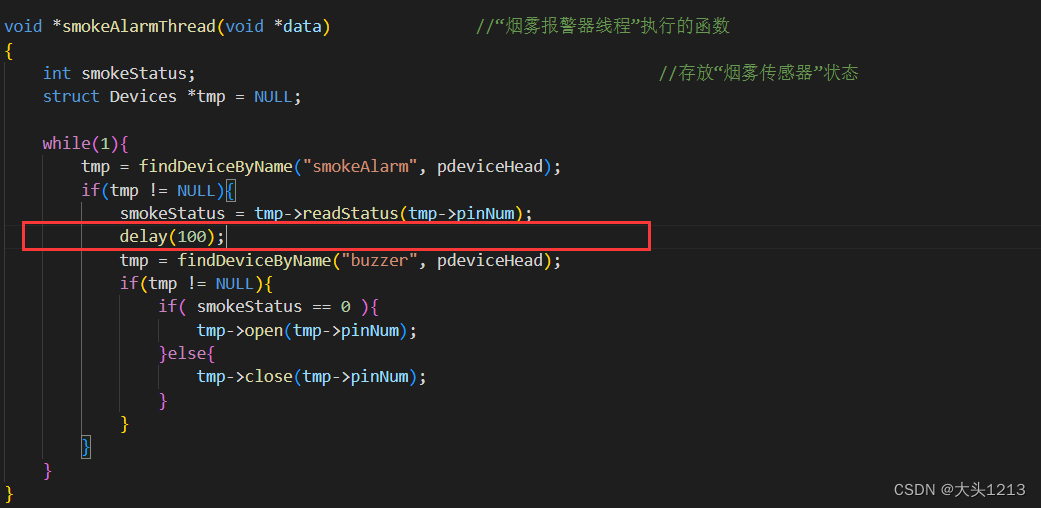
问题1:三线程同时运行,有时候无法正常进行开关灯操作。
初步排查:烟雾线程占用CPU100%,怀疑是死循环。
解决办法:加入延时函数。
问题2:在前几篇文章中,在open\close操作前都有Init操作
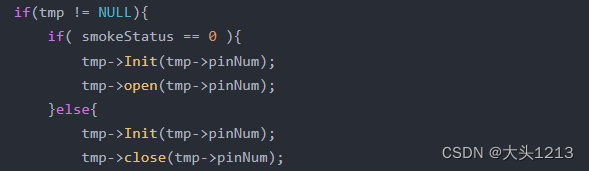
解决办法:通过指令进行初始化
if(strcmp("CSHALL",CmdHandler->command) == 0){
        tmp = findDeviceByName("smokeAlarm",pdeviceHead);
		if(tmp != NULL)  tmp->Init(tmp->pinNum);
		tmp = findDeviceByName("buzzer",pdeviceHead);
		if(tmp != NULL)  tmp->Init(tmp->pinNum);
		tmp = findDeviceByName("livingroomLight",pdeviceHead);
		if(tmp != NULL)  tmp->Init(tmp->pinNum);
		tmp = findDeviceByName("restaurantLight",pdeviceHead);
		if(tmp != NULL)  tmp->Init(tmp->pinNum);
		tmp = findDeviceByName("bedroomLight",pdeviceHead);
		if(tmp != NULL)  tmp->Init(tmp->pinNum);
		tmp = findDeviceByName("bathroomLight",pdeviceHead);
		if(tmp != NULL)  tmp->Init(tmp->pinNum);
        printf("设备已全部初始化\n");
	}
问题3: int (*changeStatus)(int status),记住设备的状态
记住设备的状态,已经执行的open、close、Init就不再执行,同时解决问题2。
待实现
智能家居项目目录
智能家居(5) —— 智能家居项目整合(语音控制线程,网络控制线程、烟雾报警线程)
网络编程知识预备(2) —— 三次握手与四次挥手、半连接状态、2MSL
网络编程知识预备(3) —— TCP流量控制(滑动窗口)、拥塞控制
网络编程知识预备(4) —— SOCKET、TCP、HTTP之间的区别与联系
网络编程知识预备(5) —— 了解应用层的HTTP协议与HTTPS协议
网络编程知识预备(6) —— libcurl库简介及其编程访问百度首页
智能家居(7) —— 人脸识别 & 翔云平台编程使用(编译openSSL支持libcurl的https访问、安装SSL依赖库openSSL)

腾讯云面向开发者汇聚海量精品云计算使用和开发经验,营造开放的云计算技术生态圈。
更多推荐
 2
2 0
0- 0


 已为社区贡献2条内容

所有评论(0)