从零开始的机器学习之路(十五)---- Practice Lab 3 Neural Networks for Handwritten Digit Recognition, Binary
·
文章目录
前引
今天还有三篇Lab 没有写 但这个Practice Lab确实很有必要 推荐写一下~
加上这篇Lab
从零开始的机器学习之路(十五)---- Practice Lab 3 Neural Networks for Handwritten Digit Recognition, Binary
1、Neural Network Recognize Digits 0/1 Start
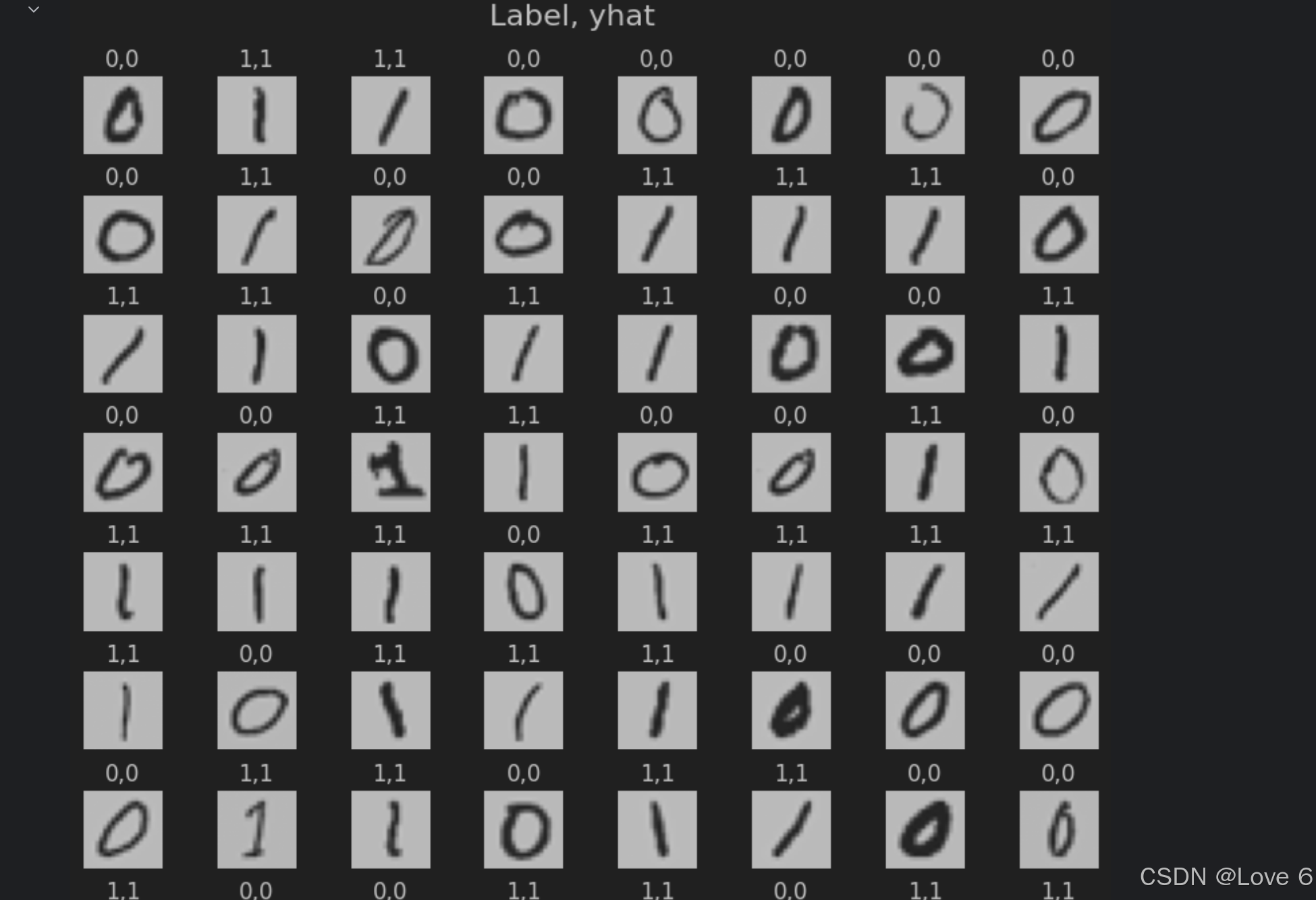
这里先介绍一下 这里要做的对于20 * 20的像素图 去预测 当前图像为 0 或者 1
下面为实际的图像 上面的数字为实际的数字
Thats Target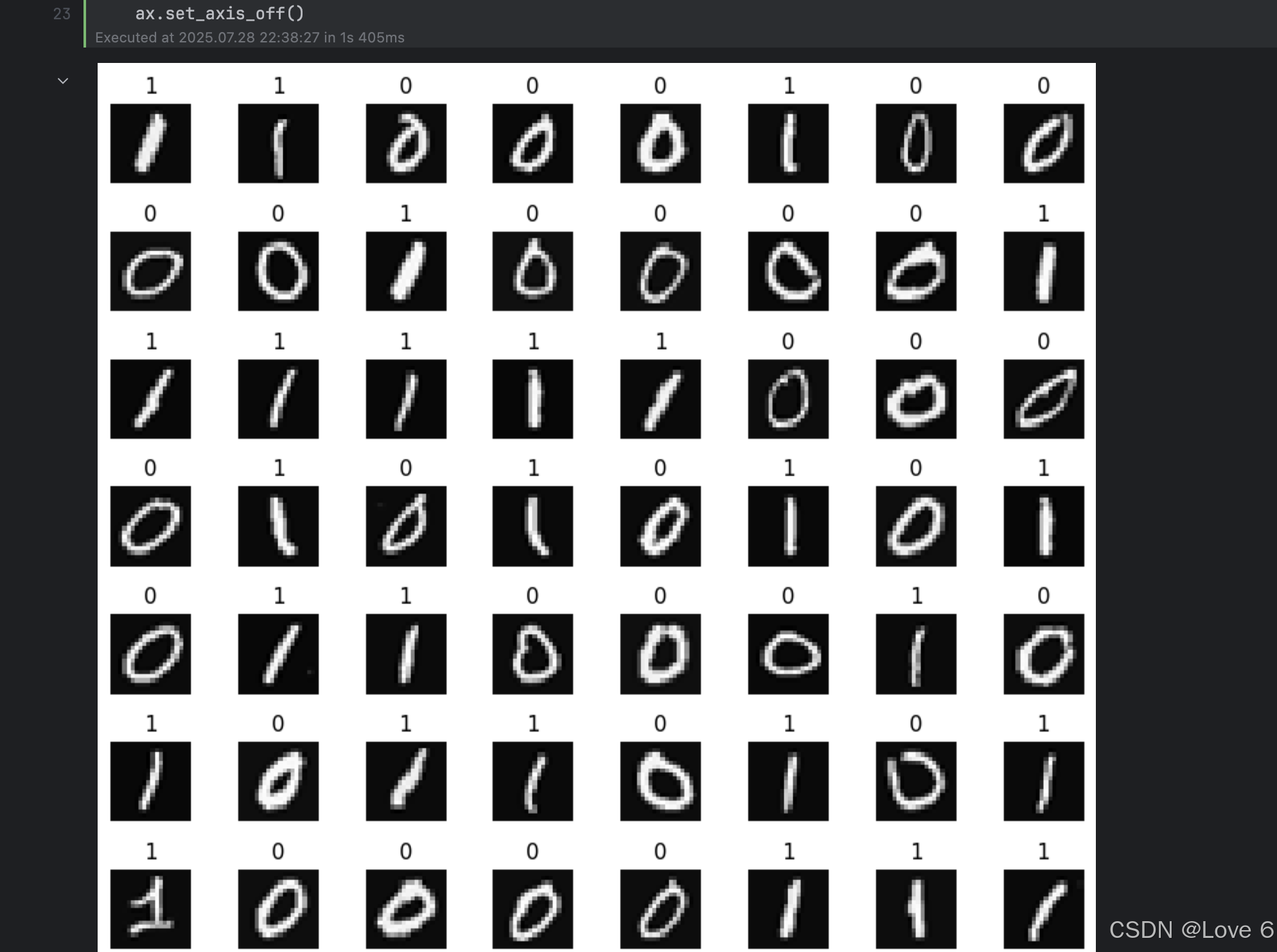
2、Model representation
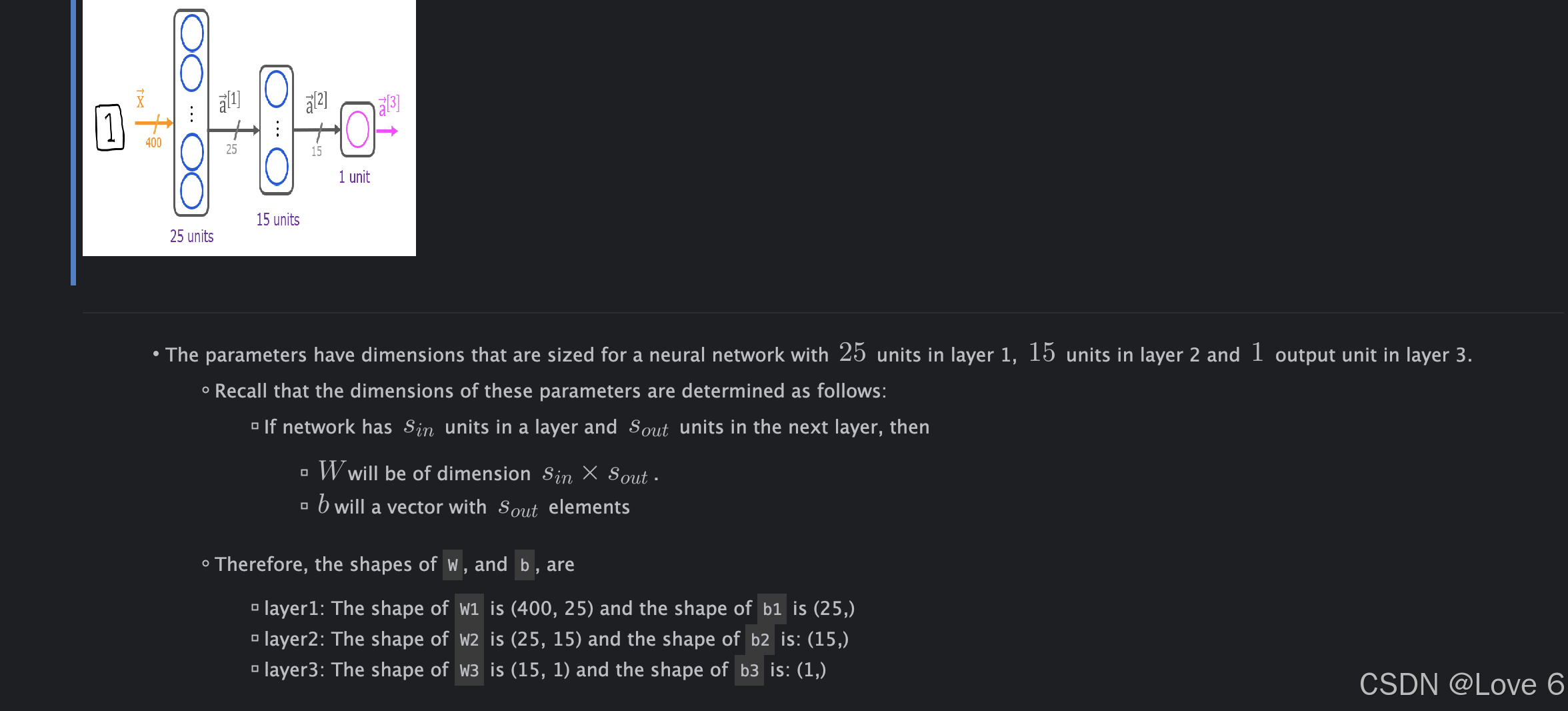
实际的模型 3层layer 第一层接受400个参数 25个输出第二层 接受25个参数 15个输出 第三层 接受15个输入 1个输出
3、Practice 1(Sequential model)
# UNQ_C1
# GRADED CELL: Sequential model

model = Sequential(
    [
        ### START CODE HERE ###
        tf.keras.Input(shape=(400,)),
        Dense(25, activation='sigmoid', name = 'layer1'),
        Dense(15, activation='sigmoid', name = 'layer2'),
        Dense(1, activation='sigmoid', name = 'layer3'),
        ### END CODE HERE ###
    ], name = "my_model"
)

model.build(input_shape=(None, 400))  # None 表示任意 batch_size

model.summary()

# assert model.input.shape.as_list() == [None, 400]  # 应通过
这里不知道test为什么不行 可以忽略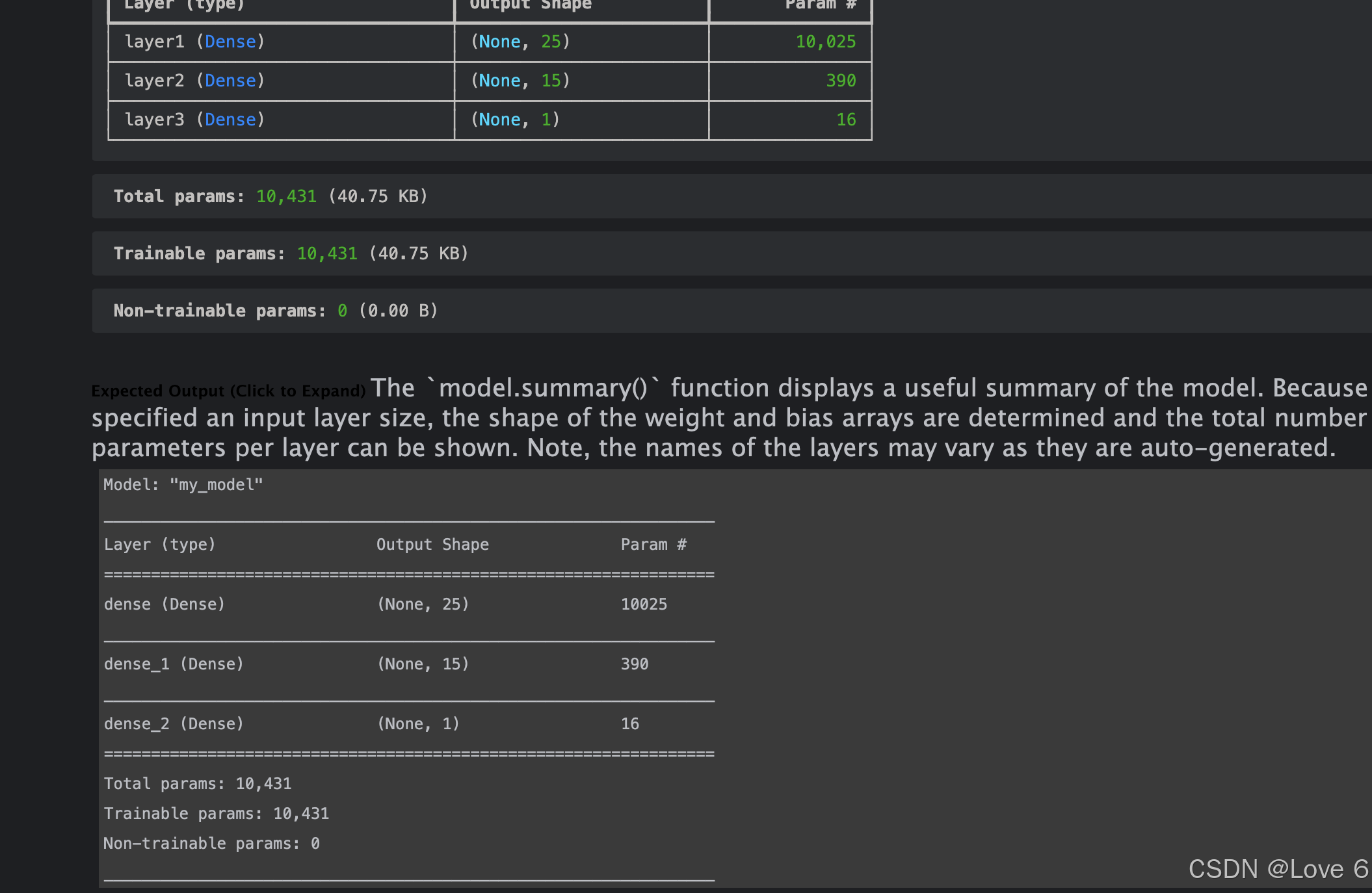
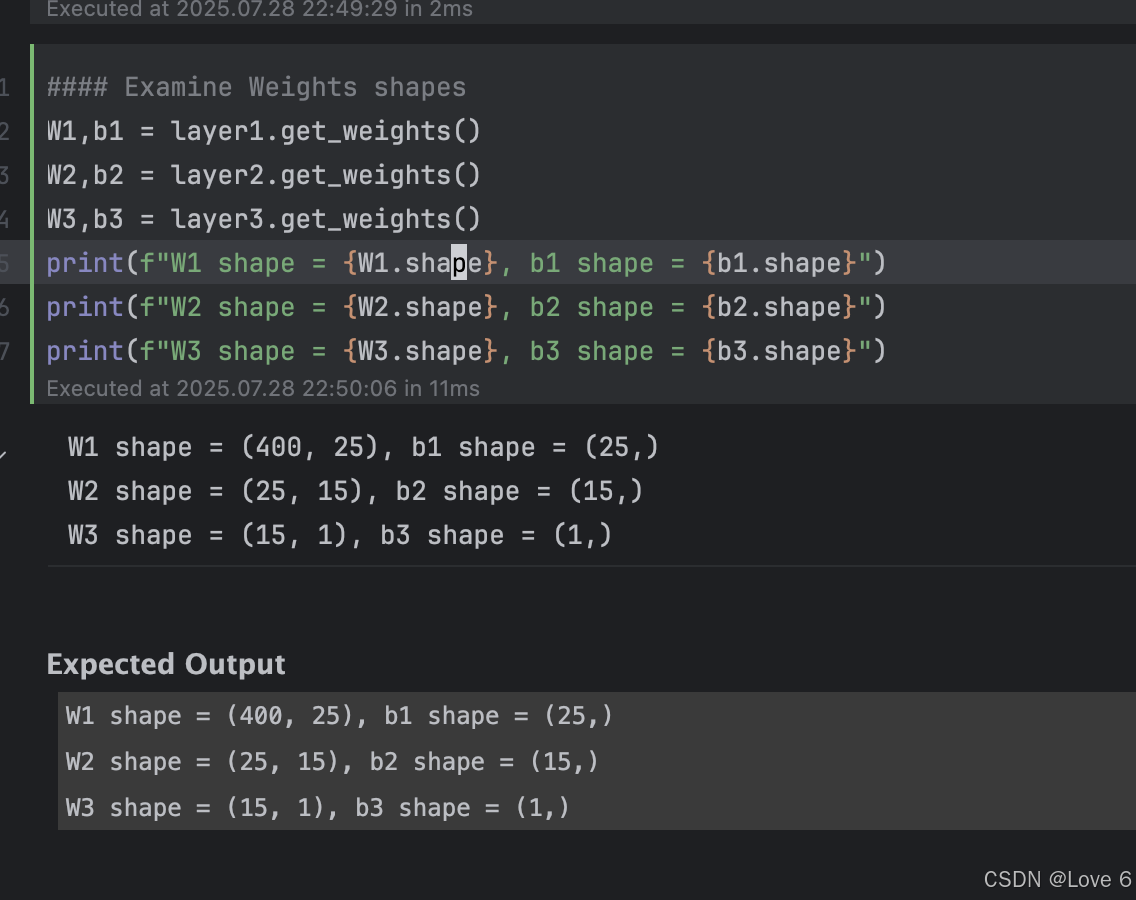
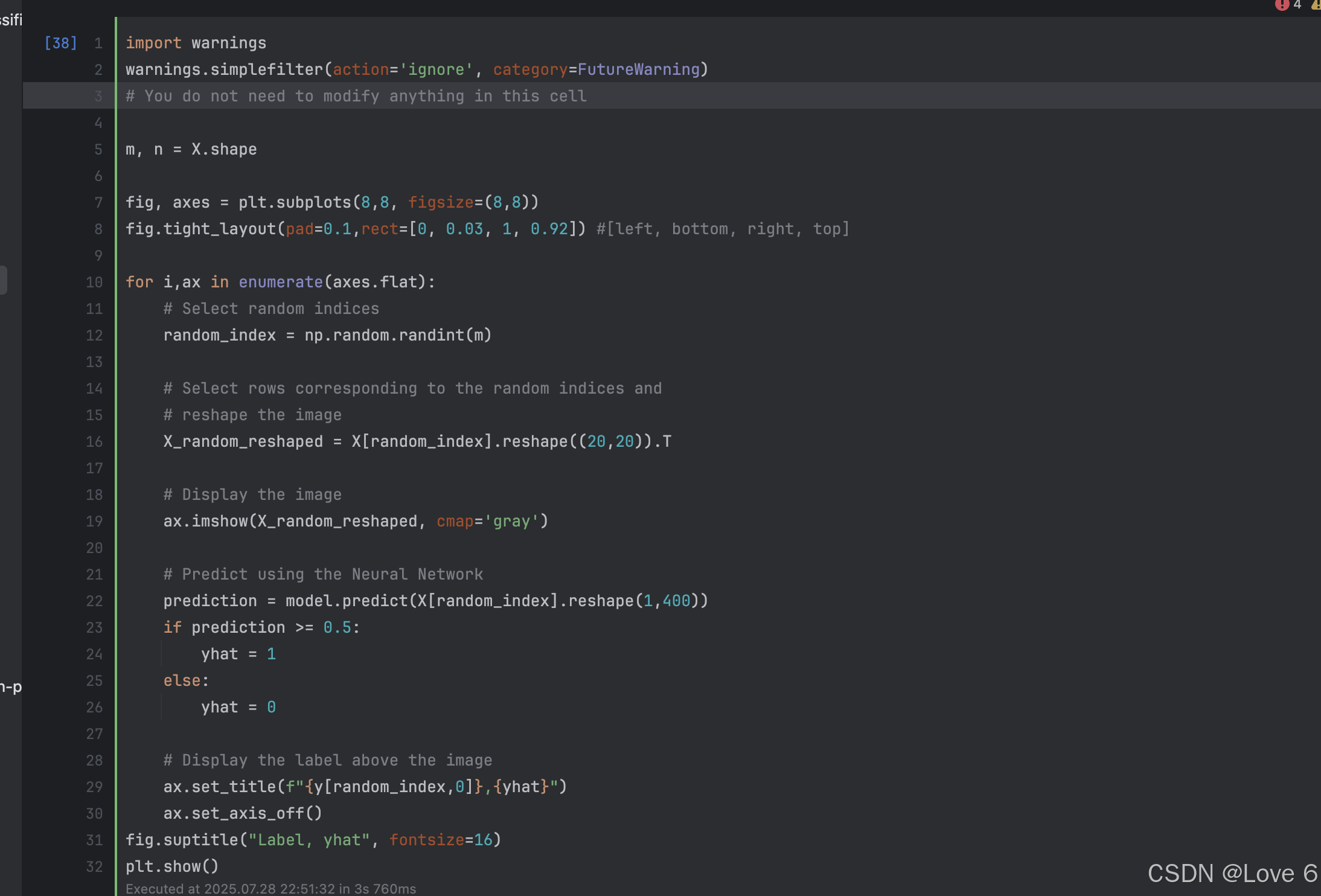
1、实际展示数据
4、Practice 2(my_dense)
下面也很简单 实际实现一下my_dense
# UNQ_C2
# GRADED FUNCTION: my_dense

def my_dense(a_in, W, b, g):
    """
    Computes dense layer
    Args:
      a_in (ndarray (n, )) : Data, 1 example
      W    (ndarray (n,j)) : Weight matrix, n features per unit, j units
      b    (ndarray (j, )) : bias vector, j units
      g    activation function (e.g. sigmoid, relu..)
    Returns
      a_out (ndarray (j,))  : j units
    """
    units = W.shape[1]
    a_out = np.zeros(units)

    ### START CODE HERE ###
    for i in range(units):
        fw_b = np.dot(a_in , W[:,i]) + b[i]
        z = g(fw_b)
        a_out[i] = z

    ### END CODE HERE ###
    return a_out
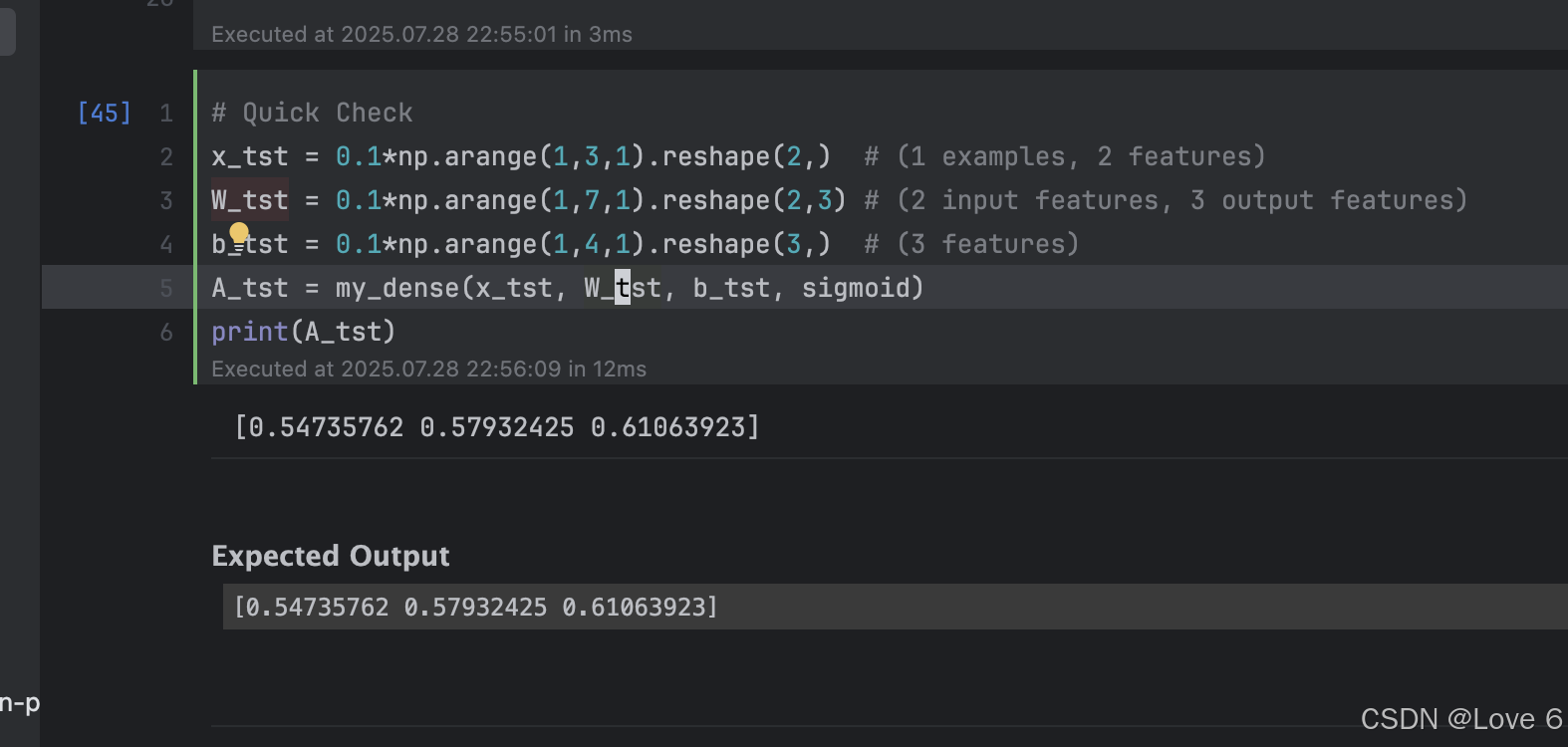
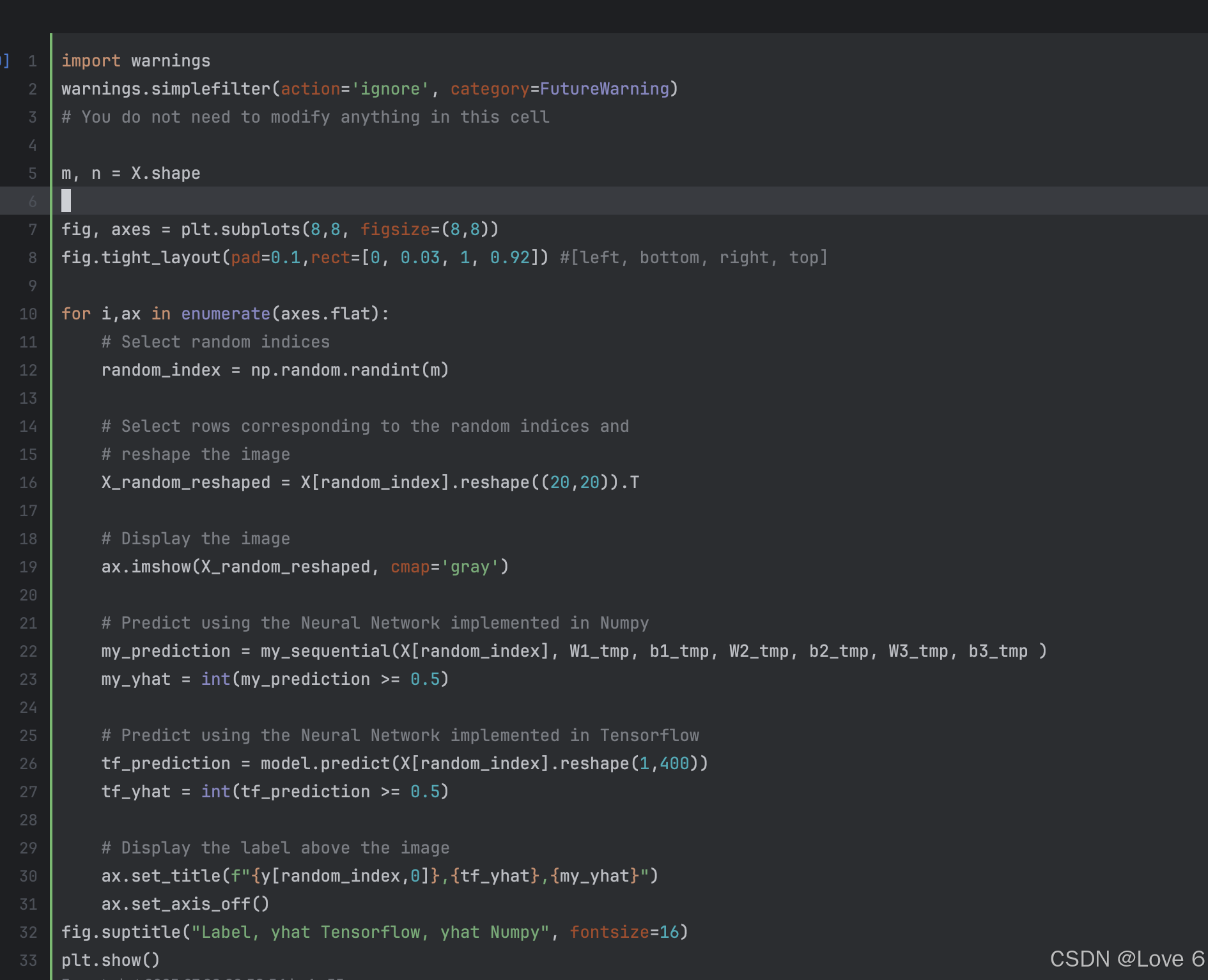
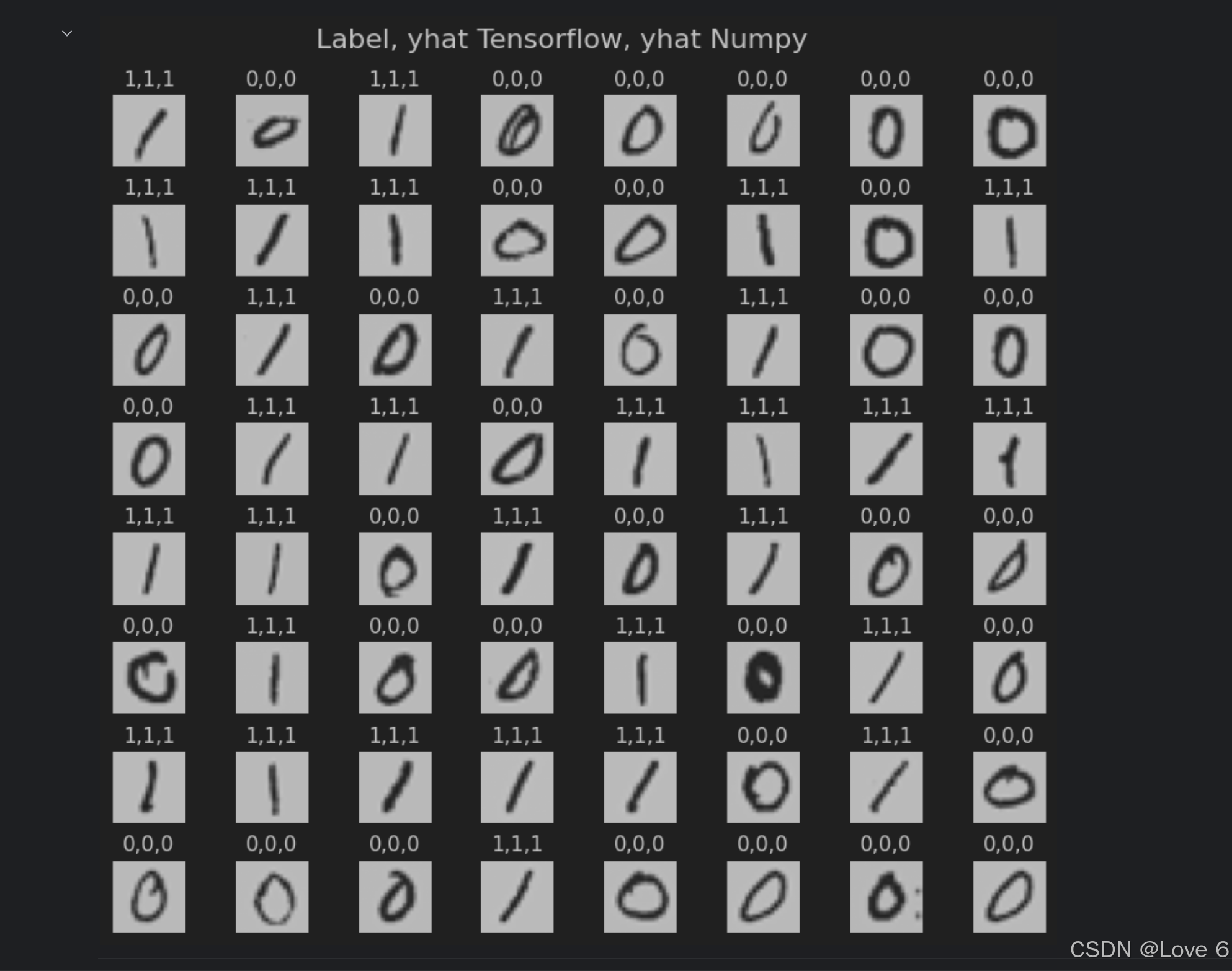
1、实际展示(numpy)
下面一共三位数字 第一个是实际数字的值 第二个则是上面用的tf 第三个是用的numpy 实际等效的实现
5、Practice 3(my_dense_v)
下面就是简单的讲 我们这样实现会更快一些 实际用了矩阵乘法
# UNQ_C3
# GRADED FUNCTION: my_dense_v

def my_dense_v(A_in, W, b, g):
    """
    Computes dense layer
    Args:
      A_in (ndarray (m,n)) : Data, m examples, n features each
      W    (ndarray (n,j)) : Weight matrix, n features per unit, j units
      b    (ndarray (1,j)) : bias vector, j units
      g    activation function (e.g. sigmoid, relu..)
    Returns
      A_out (ndarray (m,j)) : m examples, j units
    """
### START CODE HERE ###
    A_out = g(np.matmul(A_in, W) + b)

### END CODE HERE ###
    return(A_out)
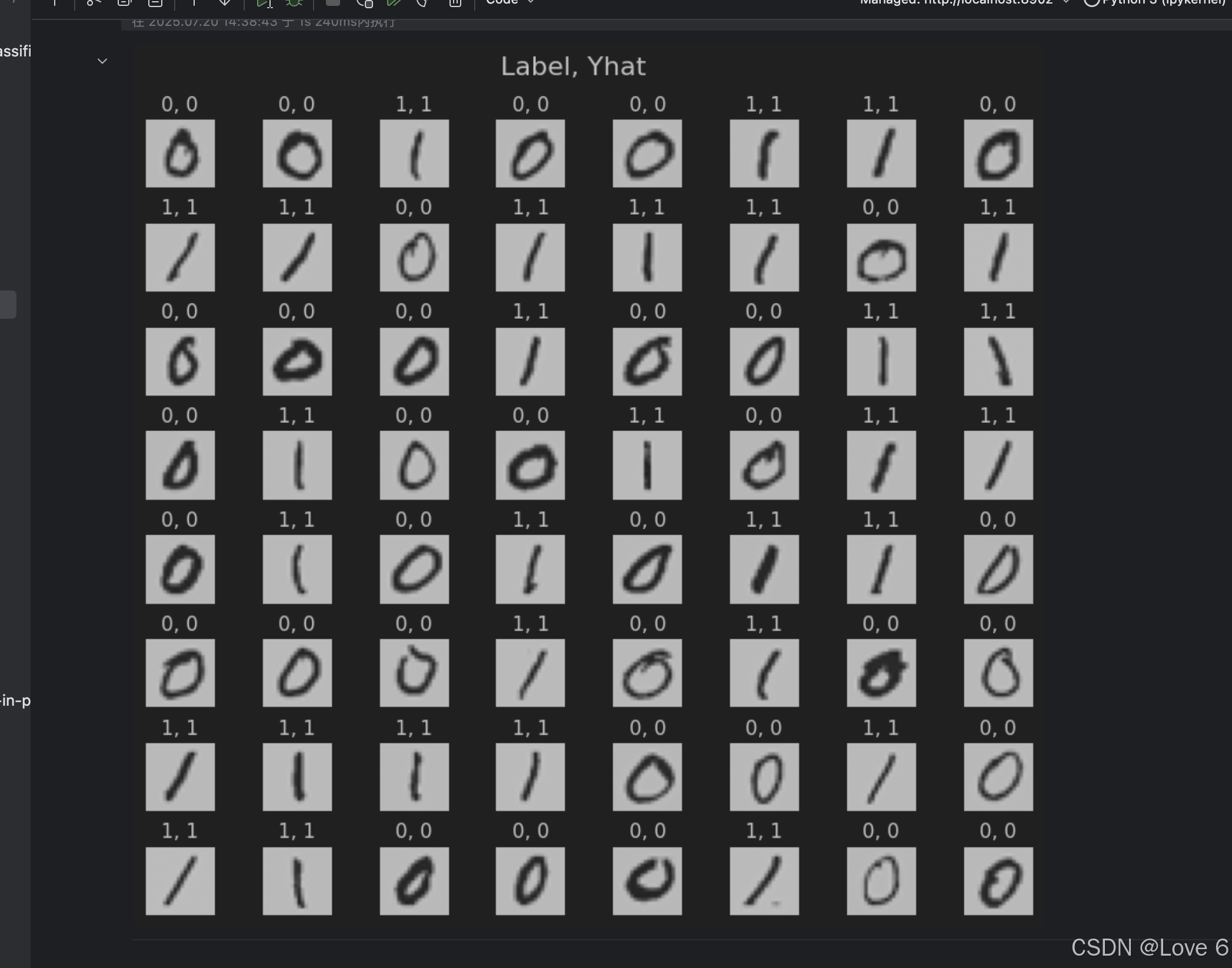
下面的数据则是 用上面的代码跑的 效果是一样的

腾讯云面向开发者汇聚海量精品云计算使用和开发经验,营造开放的云计算技术生态圈。
更多推荐
 5
5 0
0- 0


 已为社区贡献13条内容

所有评论(0)