BP神经网络——如何进行权值的初始化
如果以面向对象(OOP)的方式进行BP神经网络系统的设计与实践的话,因为权值的初始化以及类的构造都只进行一次(而且发生在整个流程的开始阶段),所以自然地将权值(全部层layer之间的全部权值)初始化的过程放在类的构函数中,而权值的初始化,一种trivial常用的初始化方法为,对各个权值使用均值为0方差为1的正态分布(也即np.random.randn(shape))进行初始化,也即:class N
如果以面向对象(OOP)的方式进行BP神经网络系统的设计与实践的话,因为权值的初始化以及类的构造都只进行一次(而且发生在整个流程的开始阶段),所以自然地将权值(全部层layer之间的全部权值)初始化的过程放在类的构函数中,而权值的初始化,一种trivial常用的初始化方法为,对各个权值使用均值为0方差为1的正态分布(也即np.random.randn(shape))进行初始化,也即:
class Network(object):
    # topology:表示神经网络拓扑结构,用list或者tuple来实现,
    # 比如[784, 30, 10],表示784个神经元的输入层,30个neuron的隐层,以及十个neuron的输出层
    def __init__(self, topology):
        self.topology = topology
        self.num_layers = len(topology)
        self.biases = [np.random.randn(y, 1) for y in topology[1:]]
        self.weights = [np.random.randn(y, x) for x, y in zip(self.weights[:-1], self.weights[1:])]
我们不妨以一个简单的具体例子,分析这种初始化方法可能存在的缺陷,如下图所示:
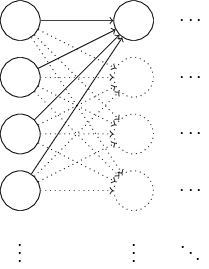
为了简化问题,我们只以最左一层向中间一层的第一个神经元(neuron)进行前向(forward)传递为例进行分析,假设一个输入样本(特征向量,x<script type="math/tex" id="MathJax-Element-1059">x</script>,维度为1000),一半为1,一半为0(这样的假设很特殊,但也很能说明问题),根据前向传递公式,
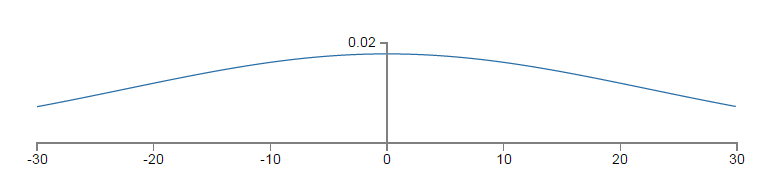
以上的平坦的概率密度函数为z<script type="math/tex" id="MathJax-Element-1066">z</script>的pdf(概率密度函数),因为pdf较为均匀,
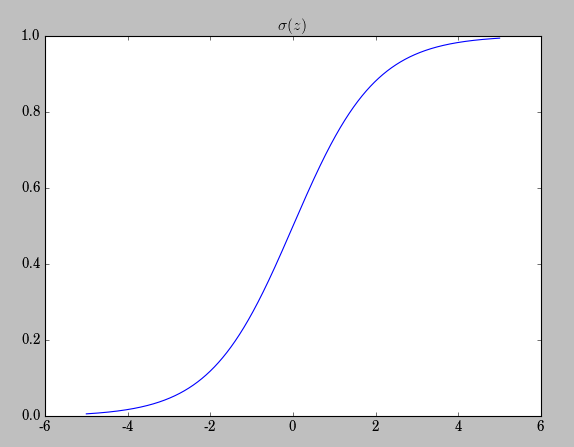
而权值更新公式为:
也就意味着越小的σ′(z)<script type="math/tex" id="MathJax-Element-1075">\sigma'(z)</script>,越小的梯度更新,同等学习率(learning rate:η<script type="math/tex" id="MathJax-Element-1076">\eta</script>)的情况下,越小的学习速率。
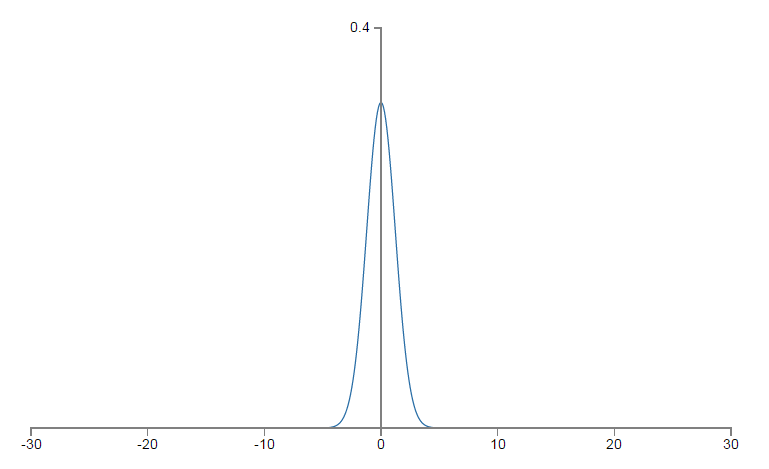
如何进行改进呢?假使输入层有nin<script type="math/tex" id="MathJax-Element-1077">n_{in}</script>个神经元,我们可将这些神经元对应的权重初始化为0均值,标准差为1/(√nin)<script type="math/tex" id="MathJax-Element-1078">1/\sqrt(n_{in})</script>,这样,高斯pdf的形式将会趋于陡峭,而不是上文的平坦,σ′(z)<script type="math/tex" id="MathJax-Element-1079">\sigma'(z)</script>将以较小的概率达到饱和状态。仍以上文的设置为基础,我们来分析,现在z<script type="math/tex" id="MathJax-Element-1080">z</script>的pdf,均值为0,标准差为
相关代码:
def default_weight_init(self):
    self.biases = [np.random.randn(y, 1)/y for y in self.topology[1:]]
    self.weights = [np.random.rand(y, x)/np.sqrt(x) for x, y in zip(self.topology[:-1], self.topology[1:])]

def large_weight_init(self):
    self.biases = [np.random.randn(y, 1) for y in self.topoloy[1:]]
self.weights = [np.random.randn(y, x)/np.sqrt(x) for x, y in zip(self.topology[:-1], self.topology[1:])]我们看到正是这样一种np.random.randn(y, x)向np.random.randn(y, x)/np.sqrt(x)小小的改变,却暗含着丰富的概率论与数理统计的知识,可见无时无刻无处不体现着数学工具的强大。

腾讯云面向开发者汇聚海量精品云计算使用和开发经验,营造开放的云计算技术生态圈。
更多推荐
 13
13 0
0- 0


 已为社区贡献17条内容

所有评论(0)