Flutter for OpenHarmony 实战:交错动画实现
欢迎加入开源鸿蒙跨平台社区: https://openharmonycrossplatform.csdn.net
前言:跨生态开发的新机遇
在移动开发领域,我们总是面临着选择与适配。今天,你的Flutter应用在Android和iOS上跑得正欢,明天可能就需要考虑一个新的平台:HarmonyOS(鸿蒙)。这不是一道选答题,而是很多团队正在面对的现实。
Flutter的优势很明确——写一套代码,就能在两个主要平台上运行,开发体验流畅。而鸿蒙代表的是下一个时代的互联生态,它不仅仅是手机系统,更着眼于未来全场景的体验。将现有的Flutter应用适配到鸿蒙,听起来像是一个“跨界”任务,但它本质上是一次有价值的技术拓展:让产品触达更多用户,也让技术栈覆盖更广。
不过,这条路走起来并不像听起来那么简单。Flutter和鸿蒙,从底层的架构到上层的工具链,都有着各自的设计逻辑。会遇到一些具体的问题:代码如何组织?原有的功能在鸿蒙上如何实现?那些平台特有的能力该怎么调用?更实际的是,从编译打包到上架部署,整个流程都需要重新摸索。
这篇文章想做的,就是把这些我们趟过的路、踩过的坑,清晰地摊开给你看。我们不会只停留在“怎么做”,还会聊到“为什么得这么做”,以及“如果出了问题该往哪想”。这更像是一份实战笔记,源自真实的项目经验,聚焦于那些真正卡住过我们的环节。
无论你是在为一个成熟产品寻找新的落地平台,还是从一开始就希望构建能面向多端的应用,这里的思路和解决方案都能提供直接的参考。理解了两套体系之间的异同,掌握了关键的衔接技术,不仅能完成这次迁移,更能积累起应对未来技术变化的能力。
混合工程结构深度解析
项目目录架构
当Flutter项目集成鸿蒙支持后,典型的项目结构会发生显著变化。以下是经过ohos_flutter插件初始化后的项目结构:
my_flutter_harmony_app/
├── lib/                          # Flutter业务代码(基本不变)
│   ├── main.dart                 # 应用入口
│   ├── home_page.dart           # 首页
│   └── utils/
│       └── platform_utils.dart  # 平台工具类
├── pubspec.yaml                  # Flutter依赖配置
├── ohos/                         # 鸿蒙原生层(核心适配区)
│   ├── entry/                    # 主模块
│   │   └── src/main/
│   │       ├── ets/              # ArkTS代码
│   │       │   ├── MainAbility/
│   │       │   │   ├── MainAbility.ts       # 主Ability
│   │       │   │   └── MainAbilityContext.ts
│   │       │   └── pages/
│   │       │       ├── Index.ets           # 主页面
│   │       │       └── Splash.ets          # 启动页
│   │       ├── resources/        # 鸿蒙资源文件
│   │       │   ├── base/
│   │       │   │   ├── element/  # 字符串等
│   │       │   │   ├── media/    # 图片资源
│   │       │   │   └── profile/  # 配置文件
│   │       │   └── en_US/        # 英文资源
│   │       └── config.json       # 应用核心配置
│   ├── ohos_test/               # 测试模块
│   ├── build-profile.json5      # 构建配置
│   └── oh-package.json5         # 鸿蒙依赖管理
└── README.md
展示效果图片
flutter 实时预览 效果展示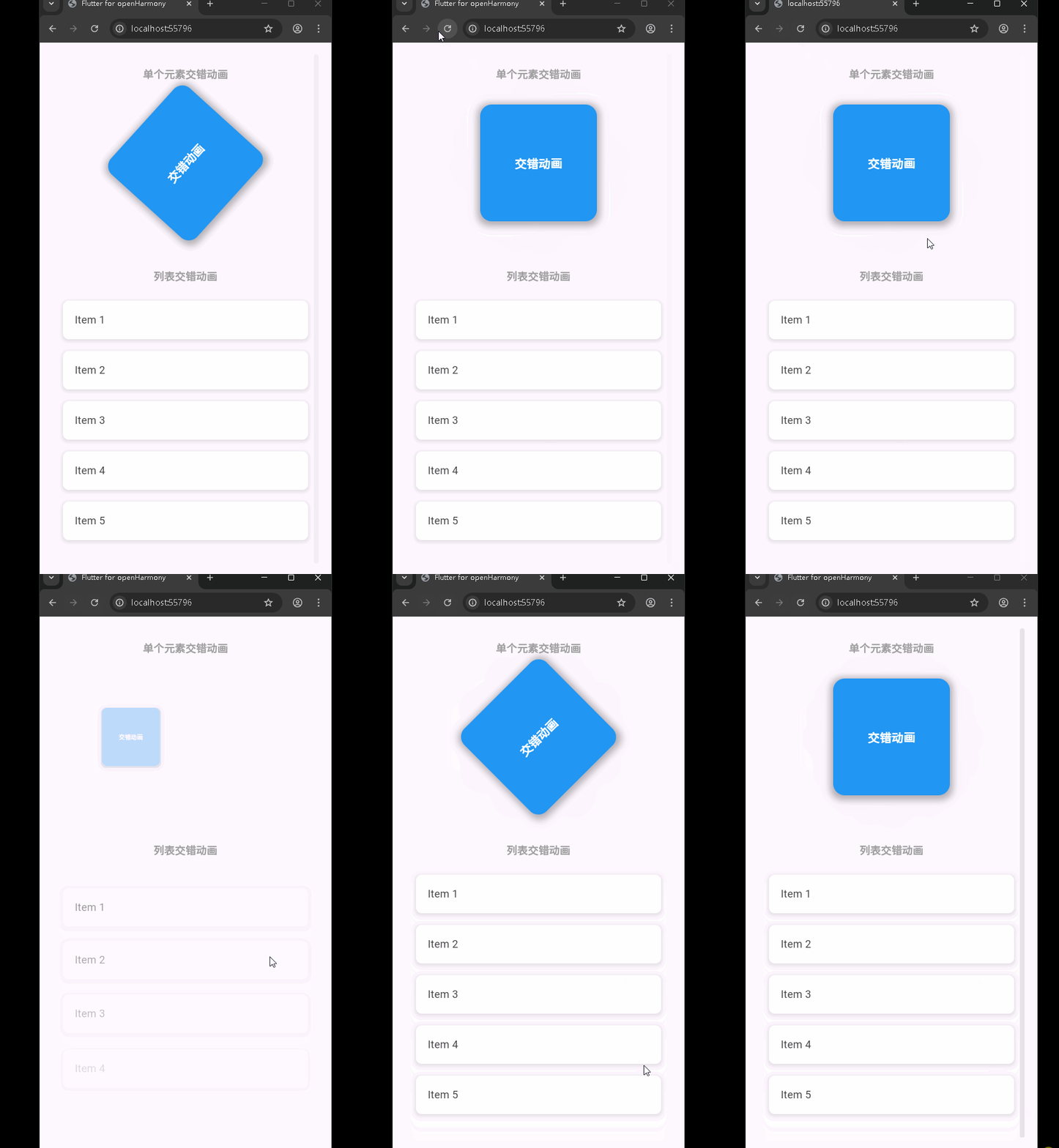
运行到鸿蒙虚拟设备中效果展示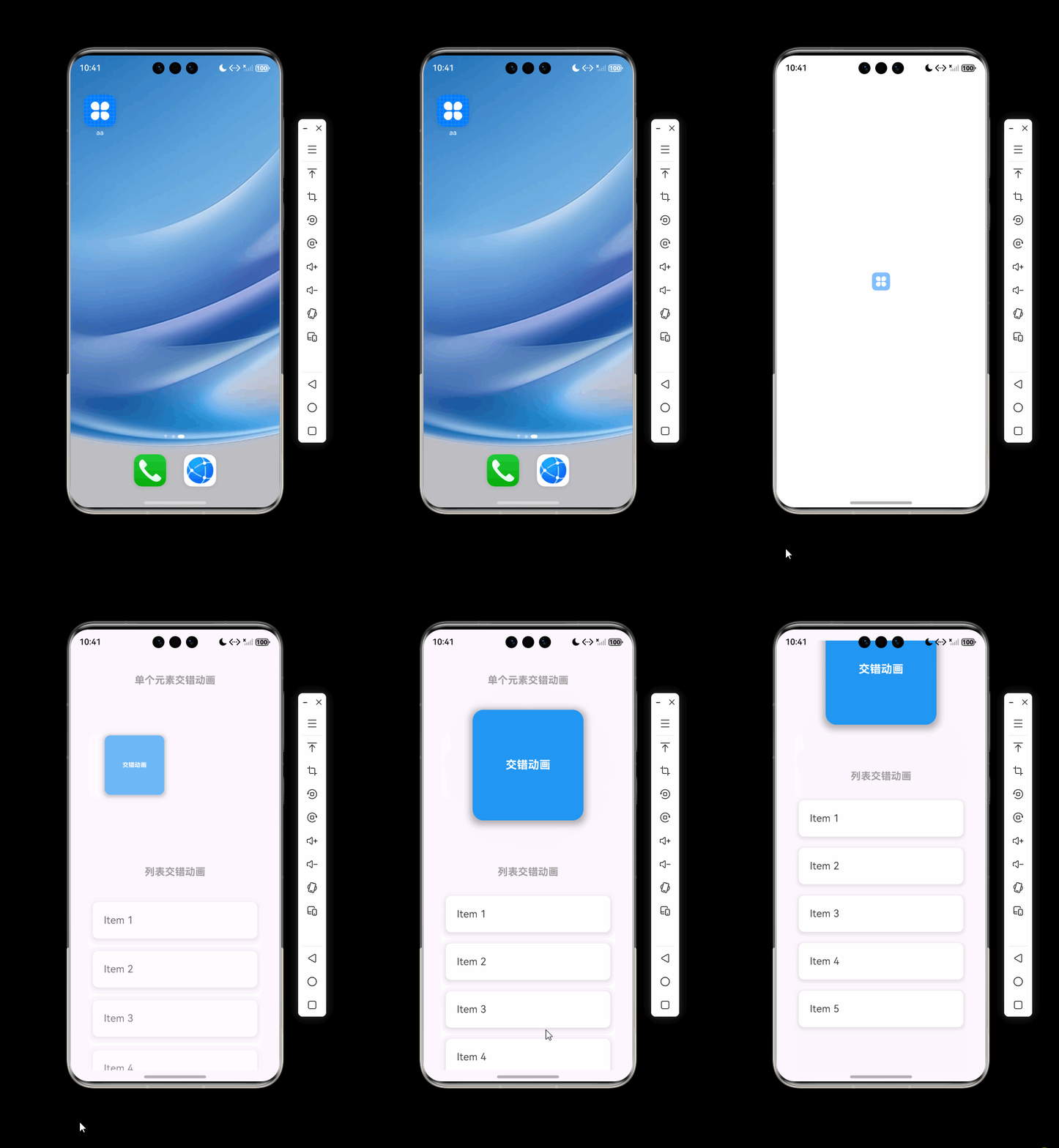
目录
功能代码实现
单个元素交错动画组件
单个元素交错动画组件 StaggeredAnimationWidget 实现了一个包含淡入淡出、缩放、旋转和滑动四种动画效果的交错动画。
实现原理
- 动画控制器配置:使用
AnimationController控制动画总时长为2秒 - 多动画序列:创建四个不同的动画(透明度、缩放、旋转、位移),并通过
Interval设置不同的动画区间,实现交错效果 - 动画组合:使用
AnimatedBuilder构建动画,将多个动画效果组合应用到同一个组件上
核心代码
class StaggeredAnimationWidget extends StatefulWidget {
const StaggeredAnimationWidget({Key? key}) : super(key: key);
_StaggeredAnimationWidgetState createState() => _StaggeredAnimationWidgetState();
}
class _StaggeredAnimationWidgetState extends State<StaggeredAnimationWidget>
with SingleTickerProviderStateMixin {
late AnimationController _controller;
late Animation<double> _opacityAnimation;
late Animation<double> _scaleAnimation;
late Animation<double> _rotationAnimation;
late Animation<Offset> _slideAnimation;
void initState() {
super.initState();
_controller = AnimationController(
duration: const Duration(seconds: 2),
vsync: this,
);
// 创建各种动画
_opacityAnimation = Tween<double>(
begin: 0.0,
end: 1.0,
).animate(
CurvedAnimation(
parent: _controller,
curve: const Interval(0.0, 0.5, curve: Curves.easeInOut),
),
);
_scaleAnimation = Tween<double>(
begin: 0.5,
end: 1.0,
).animate(
CurvedAnimation(
parent: _controller,
curve: const Interval(0.2, 0.7, curve: Curves.easeInOut),
),
);
_rotationAnimation = Tween<double>(
begin: 0.0,
end: 1.0,
).animate(
CurvedAnimation(
parent: _controller,
curve: const Interval(0.3, 0.8, curve: Curves.easeInOut),
),
);
_slideAnimation = Tween<Offset>(
begin: const Offset(-1.0, 0.0),
end: Offset.zero,
).animate(
CurvedAnimation(
parent: _controller,
curve: const Interval(0.1, 0.6, curve: Curves.easeInOut),
),
);
// 启动动画
_controller.forward();
}
void dispose() {
_controller.dispose();
super.dispose();
}
Widget build(BuildContext context) {
return AnimatedBuilder(
animation: _controller,
builder: (context, child) {
return Opacity(
opacity: _opacityAnimation.value,
child: Transform(
transform: Matrix4.identity()
..scale(_scaleAnimation.value)
..rotateZ(_rotationAnimation.value * 2.0 * 3.14159),
alignment: Alignment.center,
child: SlideTransition(
position: _slideAnimation,
child: Container(
width: 200,
height: 200,
decoration: BoxDecoration(
color: Colors.blue,
borderRadius: BorderRadius.circular(20),
boxShadow: [
BoxShadow(
color: Colors.black.withOpacity(0.3),
spreadRadius: 5,
blurRadius: 10,
offset: const Offset(0, 3),
),
],
),
child: const Center(
child: Text(
'交错动画',
style: TextStyle(
color: Colors.white,
fontSize: 20,
fontWeight: FontWeight.bold,
),
),
),
),
),
),
);
},
);
}
}
使用方法
// 直接在布局中使用
const StaggeredAnimationWidget();
注意事项
- 动画控制器管理:在
dispose方法中必须释放AnimationController,避免内存泄漏 - 动画区间设置:通过
Interval设置不同动画的开始和结束时间,实现交错效果 - 性能优化:使用
AnimatedBuilder可以避免不必要的重建,提升动画性能
列表交错动画组件
列表交错动画组件 StaggeredAnimationList 实现了一个列表项依次进入的交错动画效果。
实现原理
- 多动画实例:为列表中的每个项创建独立的动画实例
- 延迟动画:通过
Interval为每个动画设置不同的延迟时间(每个项延迟0.1秒) - 统一控制:所有动画共享同一个
AnimationController,实现统一控制
核心代码
class StaggeredAnimationList extends StatefulWidget {
const StaggeredAnimationList({Key? key}) : super(key: key);
_StaggeredAnimationListState createState() => _StaggeredAnimationListState();
}
class _StaggeredAnimationListState extends State<StaggeredAnimationList>
with SingleTickerProviderStateMixin {
late AnimationController _controller;
final List<Animation<double>> _animations = [];
final List<String> _items = ['Item 1', 'Item 2', 'Item 3', 'Item 4', 'Item 5'];
void initState() {
super.initState();
_controller = AnimationController(
duration: const Duration(seconds: 1),
vsync: this,
);
// 为每个项目创建动画,设置不同的延迟
for (int i = 0; i < _items.length; i++) {
_animations.add(
Tween<double>(
begin: 0.0,
end: 1.0,
).animate(
CurvedAnimation(
parent: _controller,
curve: Interval(
i * 0.1, // 每个项目延迟0.1秒
1.0,
curve: Curves.easeOut,
),
),
),
);
}
// 启动动画
_controller.forward();
}
void dispose() {
_controller.dispose();
super.dispose();
}
Widget build(BuildContext context) {
return ListView.builder(
shrinkWrap: true,
physics: NeverScrollableScrollPhysics(),
itemCount: _items.length,
itemBuilder: (context, index) {
return AnimatedBuilder(
animation: _animations[index],
builder: (context, child) {
return Transform(
transform: Matrix4.identity()
..translate(
_animations[index].value * 0.0, // X轴位置
(1.0 - _animations[index].value) * 50.0, // Y轴位置,从下方进入
),
child: Opacity(
opacity: _animations[index].value,
child: Container(
margin: const EdgeInsets.symmetric(
horizontal: 20,
vertical: 10,
),
padding: const EdgeInsets.all(20),
decoration: BoxDecoration(
color: Colors.white,
borderRadius: BorderRadius.circular(10),
boxShadow: [
BoxShadow(
color: Colors.black.withOpacity(0.1),
spreadRadius: 2,
blurRadius: 5,
offset: const Offset(0, 2),
),
],
),
child: Text(
_items[index],
style: TextStyle(
fontSize: 18,
color: Colors.grey.shade800,
),
),
),
),
);
},
);
},
);
}
}
使用方法
// 直接在布局中使用
const StaggeredAnimationList();
注意事项
- 列表性能:使用
shrinkWrap: true和physics: NeverScrollableScrollPhysics()确保列表在嵌套时性能良好 - 动画数量:如果列表项数量较多,应注意动画实例的创建和管理,避免内存占用过高
- 延迟时间:根据列表项数量调整延迟时间,确保动画效果自然流畅
交错动画容器组件
交错动画容器组件 StaggeredAnimationContainer 是一个整合了单个元素交错动画和列表交错动画的容器组件。
实现原理
- 布局结构:使用
ListView作为根布局,避免垂直方向溢出 - 组件组合:将两个动画组件和标题文本组合在一起
- 居中对齐:使用
Center组件确保标题和单个元素动画居中显示
核心代码
class StaggeredAnimationContainer extends StatelessWidget {
const StaggeredAnimationContainer({Key? key}) : super(key: key);
Widget build(BuildContext context) {
return Container(
padding: const EdgeInsets.all(20),
child: ListView(
children: [
const SizedBox(height: 20),
Center(
child: const Text(
'单个元素交错动画',
style: TextStyle(
fontSize: 18,
fontWeight: FontWeight.bold,
color: Colors.grey,
),
),
),
const SizedBox(height: 40),
Center(
child: const StaggeredAnimationWidget(),
),
const SizedBox(height: 80),
Center(
child: const Text(
'列表交错动画',
style: TextStyle(
fontSize: 18,
fontWeight: FontWeight.bold,
color: Colors.grey,
),
),
),
const SizedBox(height: 20),
const StaggeredAnimationList(),
const SizedBox(height: 40),
],
),
);
}
}
使用方法
// 在首页中直接使用
class MyHomePage extends StatefulWidget {
const MyHomePage({super.key, required this.title});
final String title;
State<MyHomePage> createState() => _MyHomePageState();
}
class _MyHomePageState extends State<MyHomePage> {
Widget build(BuildContext context) {
return Scaffold(
body: const StaggeredAnimationContainer(),
);
}
}
注意事项
- 布局溢出:使用
ListView代替Column可以有效避免垂直方向的布局溢出 - 间距设置:合理设置
SizedBox的高度,确保各个组件之间的间距适中 - 响应式设计:可以根据不同屏幕尺寸调整组件大小和间距,提升用户体验
本次开发中容易遇到的问题
1. 垂直布局溢出问题
问题描述
在开发过程中,当使用 Column 布局包含多个组件时,容易出现垂直方向的布局溢出错误,表现为黄色和黑色条纹标记。
解决方案
将 Column 替换为 ListView,利用 ListView 的滚动特性来适应不同屏幕尺寸的内容显示。
// 优化前
Container(
  padding: const EdgeInsets.all(20),
  child: Column(
    crossAxisAlignment: CrossAxisAlignment.center,
    children: [
      // 组件内容
    ],
  ),
);

// 优化后
Container(
  padding: const EdgeInsets.all(20),
  child: ListView(
    children: [
      // 组件内容
    ],
  ),
);
2. 动画控制器内存泄漏问题
问题描述
在使用 AnimationController 时,如果不及时释放,会导致内存泄漏。
解决方案
在 dispose 方法中调用 _controller.dispose() 释放动画控制器。
void dispose() {
_controller.dispose();
super.dispose();
}
3. 列表动画性能问题
问题描述
当列表项数量较多时,为每个项创建独立的动画实例可能会导致性能下降。
解决方案
- 对于长列表,考虑使用
AnimatedList或其他更高效的动画方案 - 合理设置动画持续时间和延迟时间,避免动画过于复杂
- 使用
const构造器和const变量,减少不必要的重建
4. 动画效果不自然问题
问题描述
交错动画的效果可能不够自然,各个动画之间的衔接不够流畅。
解决方案
- 合理设置
Interval的开始和结束时间,确保动画之间有适当的重叠 - 选择合适的曲线函数,如
Curves.easeInOut、Curves.easeOut等 - 调整动画持续时间,根据具体场景选择合适的时长
总结本次开发中用到的技术点
1. 交错动画机制
使用 AnimationController 和 Interval 实现多个动画的交错执行,通过设置不同的动画区间,创造出丰富的视觉效果。
2. 状态管理
利用 StatefulWidget 和 setState 管理动画的状态,确保动画能够正确启动和停止。
3. 动画组合
通过 AnimatedBuilder、Opacity、Transform 和 SlideTransition 等组件,实现多个动画效果的组合应用。
4. 列表动画
为列表中的每个项创建独立的动画实例,并通过延迟启动实现列表项依次进入的效果。
5. 布局优化
使用 ListView 代替 Column 避免垂直布局溢出,使用 shrinkWrap: true 和 physics: NeverScrollableScrollPhysics() 优化列表性能。
6. 性能优化
- 在
dispose方法中释放AnimationController,避免内存泄漏 - 使用
const构造器和const变量,减少不必要的重建 - 使用
AnimatedBuilder避免不必要的布局重建
7. 视觉设计
通过合理设置容器的 decoration、boxShadow 和 borderRadius 等属性,提升组件的视觉效果。
8. 代码组织
将动画功能封装为独立的组件,提高代码的可维护性和复用性,便于在其他项目中快速集成交错动画效果。
通过以上技术点的应用,我们成功实现了一个视觉效果丰富的交错动画示例,展示了 Flutter 在动画方面的强大能力。这些技术不仅适用于交错动画,也可以应用于其他类型的动画效果开发中,为应用增添更多的视觉吸引力。
欢迎加入开源鸿蒙跨平台社区: https://openharmonycrossplatform.csdn.net

腾讯云面向开发者汇聚海量精品云计算使用和开发经验,营造开放的云计算技术生态圈。
更多推荐
 18
18 0
0- 0


 已为社区贡献9条内容

所有评论(0)