ALNS算法在无人机与车辆混合配送问题中的应用:效果显著,助力物流业提升效率的优质学习资料
ALNS算法解决无人机与车辆混合配送问题,效果显著,很好的学习资料
最近在研究无人机与车辆混合配送问题,发现ALNS(Adaptive Large Neighborhood Search)算法在这类问题上表现相当不错。ALNS的核心思想是通过不断调整搜索邻域来寻找更优的解,特别适合处理复杂的组合优化问题。今天就来聊聊这个算法,顺便写点代码,看看它到底是怎么工作的。
首先,ALNS的基本框架可以分为几个步骤:初始化、破坏、修复、接受和更新。初始化阶段,我们生成一个初始解,这个解可以是一个简单的贪心解,或者随机生成的解。接下来,在破坏阶段,我们随机移除一部分解中的元素,比如在配送问题中,我们可以随机移除一些配送点。然后,在修复阶段,我们通过某种策略重新插入这些被移除的元素,生成一个新的解。
def alns(initial_solution, destroy_method, repair_method, max_iterations):
    current_solution = initial_solution
    best_solution = current_solution

    for iteration in range(max_iterations):
        removed_elements = destroy_method(current_solution)

        # 修复阶段
        new_solution = repair_method(current_solution, removed_elements)

        # 接受新解
        if accept(new_solution, current_solution):
            current_solution = new_solution

        # 更新最优解
        if is_better(new_solution, best_solution):
            best_solution = new_solution

return best_solution这段代码是一个简化的ALNS框架。destroymethod和repairmethod是破坏和修复策略的函数,accept函数决定是否接受新解,is_better函数用于比较两个解的优劣。
在无人机与车辆混合配送问题中,破坏策略可以设计为随机移除一些配送点,或者移除某些特定的配送点(比如距离较远的点)。修复策略则可以考虑将移除的配送点重新分配给无人机或车辆,以优化整体配送成本。
def destroy_random(solution, num_removals):
    # 随机移除num_removals个配送点
    removed = random.sample(solution, num_removals)
    new_solution = [point for point in solution if point not in removed]
    return removed, new_solution

def repair_greedy(solution, removed):
    # 贪心策略重新插入移除的配送点
    for point in removed:
        best_position = find_best_position(solution, point)
        solution.insert(best_position, point)
return solution这里,destroyrandom函数随机移除一些配送点,repairgreedy函数则通过贪心策略重新插入这些点。findbestposition函数可以根据某种启发式规则(比如最小化总配送距离)找到最佳插入位置。
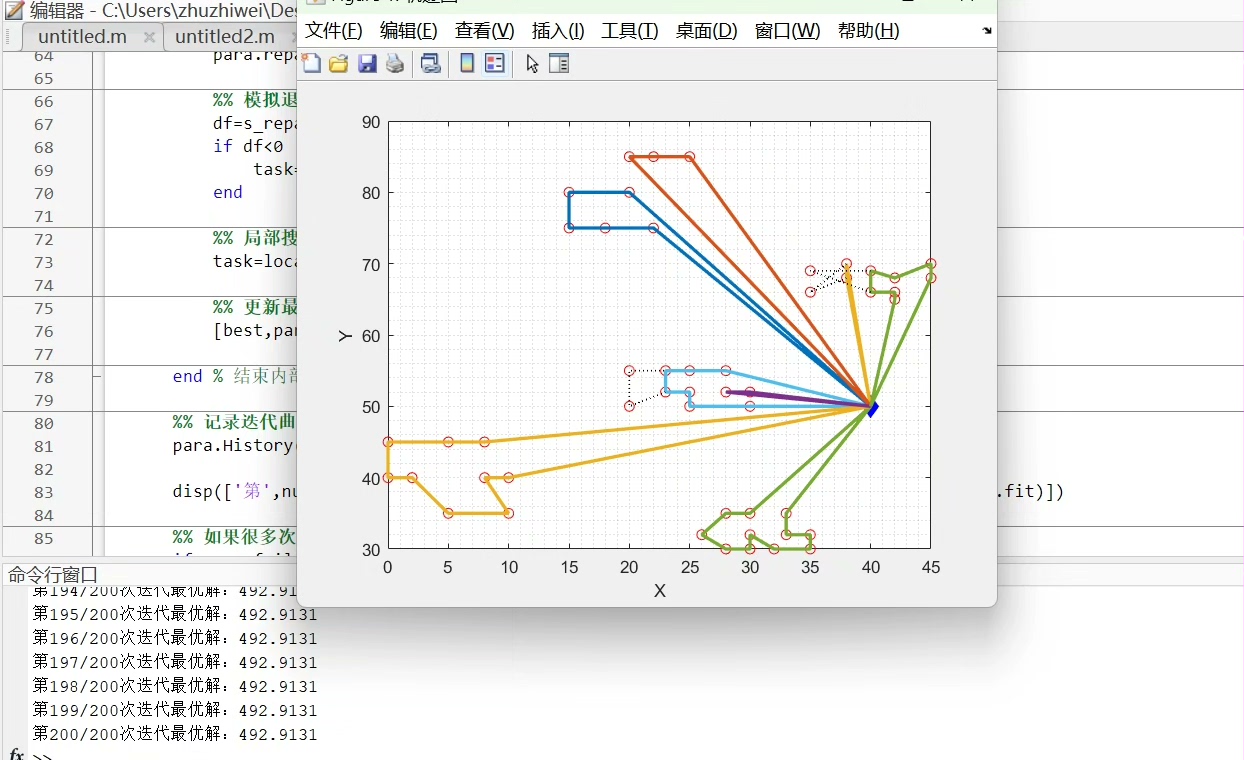
ALNS算法解决无人机与车辆混合配送问题,效果显著,很好的学习资料
ALNS的灵活性在于,破坏和修复策略可以根据具体问题进行调整。比如,在无人机与车辆混合配送问题中,我们可以设计更复杂的策略,考虑无人机的飞行时间、车辆的载重限制等因素。
def destroy_time_based(solution, time_threshold):
    # 移除飞行时间超过阈值的配送点
    removed = [point for point in solution if calculate_flight_time(point) > time_threshold]
    new_solution = [point for point in solution if point not in removed]
    return removed, new_solution

def repair_vehicle_first(solution, removed):
    # 优先将移除的配送点分配给车辆
    for point in removed:
        if can_be_assigned_to_vehicle(point):
            best_position = find_best_position(solution, point)
            solution.insert(best_position, point)
        else:
            # 如果无法分配给车辆,再考虑无人机
            best_position = find_best_position(solution, point)
            solution.insert(best_position, point)
return solution在这个例子中,destroytimebased函数移除飞行时间过长的配送点,repairvehiclefirst函数则优先将移除的点分配给车辆,如果无法分配给车辆,再考虑无人机。
ALNS算法的另一个优势是它的自适应性。通过记录不同破坏和修复策略的表现,算法可以动态调整策略的选择概率,从而在搜索过程中不断优化。
def update_strategy_weights(strategy_weights, strategy_performance):
    # 根据策略表现更新权重
    for strategy, performance in strategy_performance.items():
        strategy_weights[strategy] = strategy_weights[strategy] * 0.9 + performance * 0.1
return strategy_weightsupdatestrategyweights函数根据策略的表现动态调整权重,表现好的策略在后续迭代中更有可能被选中。
总的来说,ALNS算法在无人机与车辆混合配送问题中表现出色,主要得益于它的灵活性和自适应性。通过设计合适的破坏和修复策略,并结合动态调整机制,ALNS能够有效地搜索到高质量的解决方案。如果你也在研究类似的问题,ALNS绝对是一个值得尝试的算法。
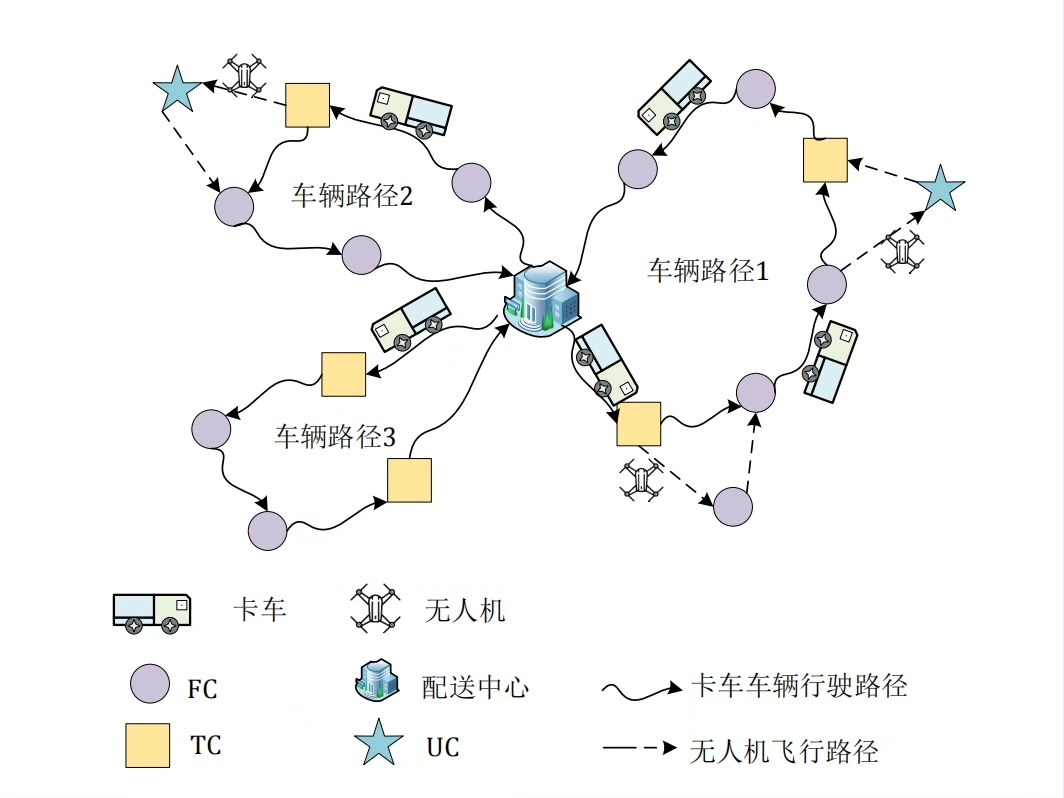
代码和思路都在这了,剩下的就是动手实践了。希望这篇文章能给你一些启发,祝你在优化问题的探索中取得好成绩!

腾讯云面向开发者汇聚海量精品云计算使用和开发经验,营造开放的云计算技术生态圈。
更多推荐
 4
4 0
0- 0


 已为社区贡献14条内容

所有评论(0)